
Casino Apps
 Available in GB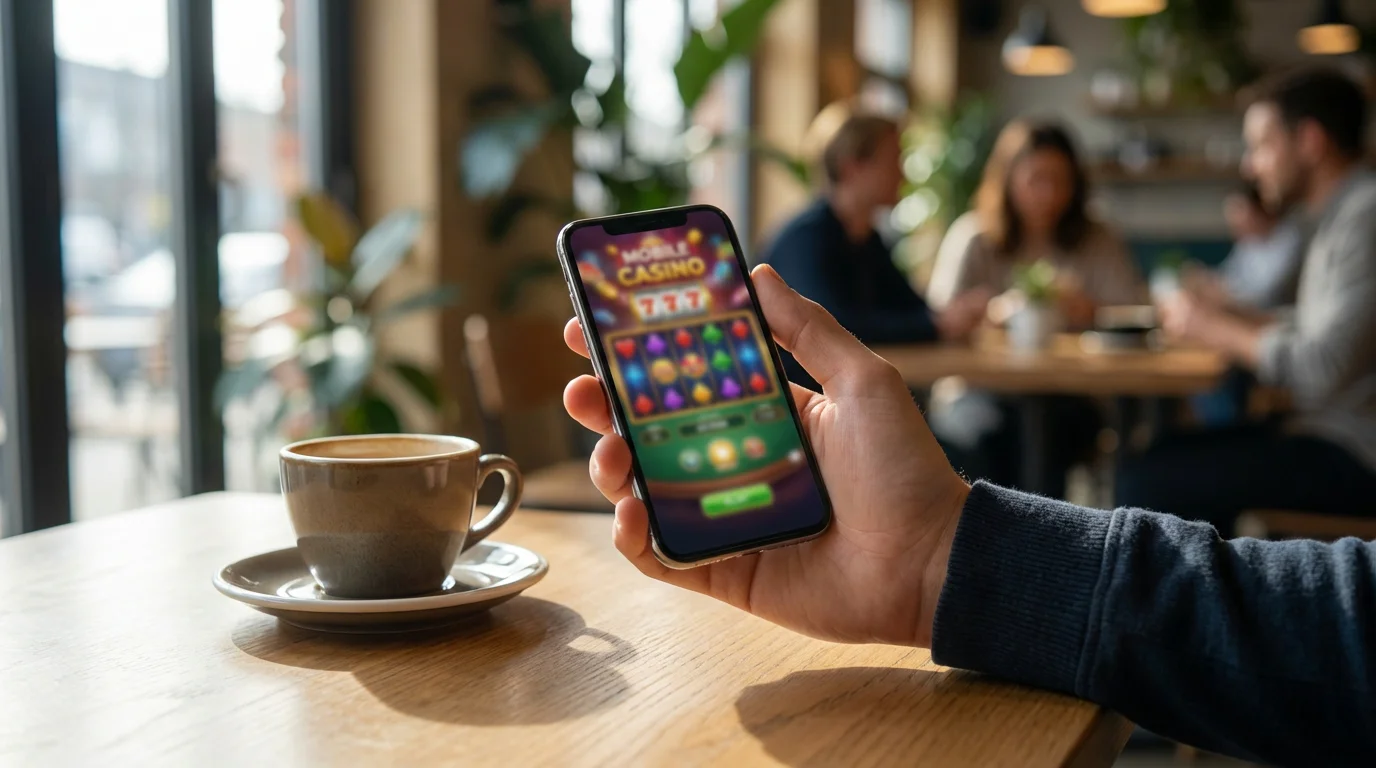
Mobile Gambling Outside GamStop — How Non GamStop Casinos Reach Your Phone
Most online gambling in the UK now happens on a phone. Industry data consistently shows that mobile accounts for over 70% of all online gambling sessions, a figure that has climbed steadily every year and shows no sign of reversing. For non GamStop casinos, this creates both an opportunity and a technical challenge. The opportunity is obvious — if you are not accessible on mobile, you are invisible to the majority of your audience. The challenge is less obvious but more interesting: getting a gambling app onto a player’s phone when the major app stores actively resist it. Find more mobile guides at newnongstopcasinos.
Apple’s App Store and Google’s Play Store both enforce policies that restrict real-money gambling apps. Apple requires a gambling app developer to hold a valid licence in the jurisdictions where the app is distributed, and Apple’s review process is rigorous. For UKGC-licensed operators, this means their apps can be listed in the UK App Store after compliance verification. For non GamStop casinos licensed in Curaçao or Anjouan, the path to the App Store is effectively closed — Apple does not recognise these licences as sufficient for UK distribution.
Google Play has historically been even more restrictive. Although Google began allowing real-money gambling apps in select countries in 2021, the eligibility criteria require a valid licence from the relevant local gambling authority. In the UK, that means a UKGC licence. Non GamStop casinos, by definition, do not have one. The result is a market where the standard distribution channels for mobile software are largely unavailable to offshore operators.
This does not mean non GamStop casinos are inaccessible on mobile. It means they reach your phone through different channels — primarily mobile-optimised browser sites and, in some cases, APK files distributed directly from the casino’s website. Understanding the differences between these approaches, and the trade-offs each involves, matters for the practical experience of playing on your phone.
Mobile Browser vs Native App — What’s Actually Available
The vast majority of non GamStop casinos deliver their mobile experience through responsive browser-based sites rather than downloadable apps. You open Chrome, Safari, or Firefox on your phone, navigate to the casino’s URL, and the site renders in a layout optimised for your screen size. No download, no installation, no storage space consumed. The browser-based approach is the default because it sidesteps the app store gatekeepers entirely and works across every device with a modern web browser.
Modern HTML5 casino platforms have closed most of the gap that once existed between browser and native app experiences. Games from established providers — Pragmatic Play, NetEnt, Play’n GO, Hacksaw Gaming, Evolution — are developed as HTML5 applications that run natively in a mobile browser without Flash or Java dependencies. Animations are smooth, touch controls are responsive, and the visual quality on a decent smartphone is indistinguishable from the desktop version. Live dealer streams work in-browser as well, typically using HLS or WebRTC protocols that handle adaptive video quality based on your connection speed.
A subset of non GamStop casinos go a step further and offer Progressive Web Apps. A PWA is essentially a bookmark on steroids — you add the casino’s website to your home screen, and it launches in a full-screen window without the browser’s address bar and navigation chrome. PWAs can cache assets locally for faster loading, send push notifications (if you grant permission), and generally behave like a lightweight native app. The visual difference between opening a well-built PWA and opening a native app from the App Store is negligible. The functional difference is also minimal for a casino, where the core interaction — playing games, managing your balance, contacting support — does not require deep device integration.
Native apps distributed as Android APK files represent the third option. Because Google Play does not list non GamStop casino apps, some operators provide an APK download directly on their website. You download the file, enable “Install from Unknown Sources” in your Android settings, and install the app manually. This gives you a genuine native app with home screen presence, push notifications, and potentially smoother performance than a browser-based experience — particularly on older devices with limited RAM.
The trade-off with APK installation is trust. When you install an app from the Play Store, Google has reviewed it for malware, data collection practices, and policy compliance. When you install an APK from a casino’s website, that review has not occurred. You are trusting that the file is what it claims to be and that it does not contain malicious code. For reputable non GamStop casinos, this risk is low — the APK is simply a packaged version of their browser site. For less established operators, the risk is real. If you choose to install an APK, download it only from the casino’s official domain, verify the file size and hash if provided, and scan it with your device’s security software before installation.
iOS users have fewer options. Apple does not permit sideloading of apps in the same way Android does, and non GamStop casinos cannot access the App Store. The browser-based and PWA routes are the only viable paths on iPhone and iPad. In practice, this is rarely a limitation — Safari’s rendering engine handles modern HTML5 casino platforms without issue, and PWAs on iOS deliver a near-native experience for most use cases.
Performance, Compatibility, and the Practical Experience
The quality of a mobile casino experience depends on three factors: the device, the connection, and the platform. The first two are within the player’s control. The third is where non GamStop casinos differentiate themselves — for better and for worse.
Device requirements for browser-based casino play are modest by 2026 standards. Any smartphone released in the last four to five years will run HTML5 slot games and RNG table games without performance issues. iPhones from the SE second generation onwards and mid-range Android devices from Samsung, Xiaomi, or Google handle casino sites comfortably. Where device capability starts to matter is live dealer gaming. Streaming a live video feed while simultaneously interacting with the betting interface requires more processing power and more stable memory management than spinning a slot. Older devices or budget phones with less than 3GB of RAM may experience frame drops, audio lag, or interface stuttering during live dealer sessions.
Connection quality matters more than device spec for most mobile casino activity. Slot games and RNG table games load their assets once and then operate locally, so a brief connection interruption rarely causes problems — the game state is preserved and syncs with the server when connectivity resumes. Live dealer games are a different story. They require a continuous, stable data stream. On a 4G connection with decent signal strength, the experience is generally smooth. On a patchy 3G connection, in a building with poor signal penetration, or during network congestion, the live stream will buffer, and you may miss betting windows.
The casino platform itself is the variable that you cannot control and can only evaluate by testing. Well-built non GamStop casinos have responsive sites that adapt cleanly to different screen sizes, with touch-friendly buttons, legible text, and menus that do not require zooming or horizontal scrolling. Poorly built sites have layouts that overflow the screen, buttons too small to tap accurately, and cashier pages that malfunction on mobile browsers. The gap between the best and worst mobile experiences in the non GamStop market is wider than in the UKGC-regulated market, where app store review processes and regulatory expectations impose a baseline quality standard.
A few practical considerations worth checking before committing to a non GamStop casino on mobile. First, test the cashier on your phone. The deposit and withdrawal process should work entirely within the mobile browser, without redirecting to a desktop-formatted page or requiring you to switch to a laptop to complete a transaction. Second, check whether the game library is the same on mobile as on desktop. Some non GamStop casinos display a reduced game selection on mobile, particularly for older titles that were not built with responsive design. Third, test customer support from your phone. If the live chat widget does not load on mobile, or the chat window is unusable on a small screen, you will not have access to support when you need it most — which, statistically, is while you are playing on your phone.
The Screen Is Smaller, the Stakes Are the Same
Mobile gambling is convenient in a way that desktop gambling is not, and that convenience carries its own risk. A laptop requires a deliberate action — sitting down, opening the device, navigating to the site. A phone is already in your hand. The distance between “I’ll check the scores” and “I’ll just play a few spins” is a single tap, and non GamStop casinos are designed to make that transition as seamless as possible.
This is not a criticism of mobile design. It is an observation about the environment in which mobile gambling occurs. You play on the bus, during a work break, in bed at midnight. The sessions are shorter, the context is less structured, and the boundary between gambling time and non-gambling time is blurred. Research on mobile gambling behaviour consistently finds that mobile sessions are more frequent but shorter than desktop sessions, and that impulsive deposits — the kind made without a clear budget or intention — are more common on mobile devices.
At UKGC-licensed casinos, mandatory features like reality check pop-ups and session time alerts provide an external nudge that interrupts the flow of play. At non GamStop casinos, these tools may or may not be present. If they are absent, the only thing standing between a thoughtful session and an impulsive one is your own discipline. Setting a deposit limit — even a mental one, backed by a separate e-wallet loaded with a fixed daily or weekly budget — is more important on mobile than on any other platform, precisely because the friction is lower. Also read our fast sign-up casinos.
The mobile experience at non GamStop casinos ranges from excellent to barely functional. The best sites are fast, responsive, and feature-complete on a phone. The worst are desktop sites squeezed into a mobile viewport with broken menus and a cashier that requires switching to landscape mode. Testing the site on your phone before you deposit is the simplest quality check available, and it takes two minutes. If the mobile experience is poor, the casino has not invested in the platform that the majority of its players will use — and that tells you something about how it prioritises the player experience everywhere else.