
Make Sense of Casino Dice Searches
 Available in GB
The phrase can refer to dice-based wagers, dice-themed slots or casino searches that also touch on bonuses and alternative payment methods.
What Casino Dice Searches Actually Cover
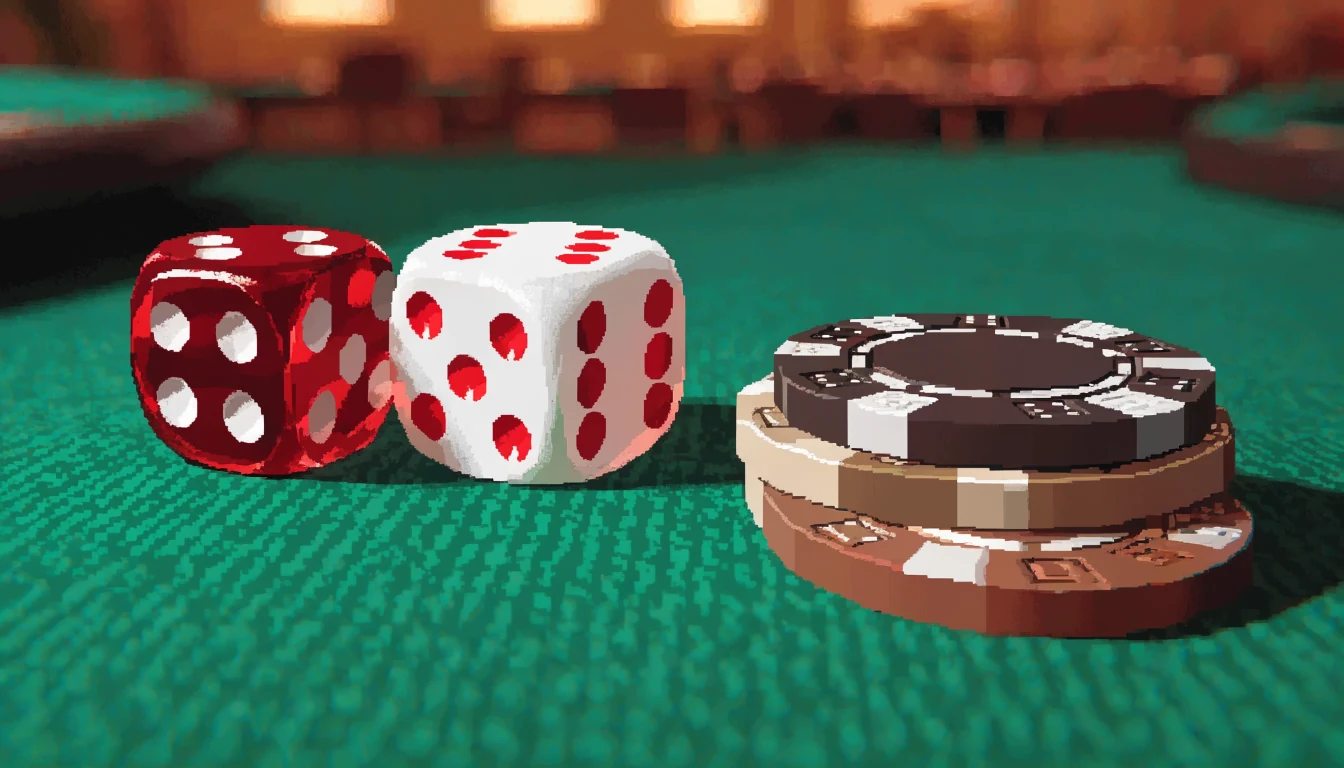
The phrase “casino dice game” points to gambling where a stake is placed on a possible result involving dice. The broader term “casino dice” can refer to the dice themselves, the game format or the chance to wager on an outcome. In each case, the defining feature is not the shape of the equipment but the stake and the uncertainty attached to the result.
Casino games involve cash or chips wagered on possible random outcomes, or on combinations of outcomes. Dice fit that description when their result determines whether a stake wins or loses. A search for a dice game at a casino therefore signals an interest in a particular way of producing an uncertain result, rather than a claim about casino games as a whole.
That distinction matters because casinos cover more than dice-based gambling. The word “casino” describes the setting or category; it does not mean that every game uses dice. A casino game can be built around other formats, so the presence of dice in one search phrase narrows the subject to a possible game feature, not the entire range of casino entertainment.
The wording may also combine several ideas. “Dice casino” can mean a casino game involving dice, while “casino with dice games” suggests a platform offering that kind of play. Adding a reference to cryptocurrency shifts the emphasis towards how a platform is funded or described, not towards the mechanics of a dice result. Those are separate questions: the game concerns what determines the outcome, while the platform concerns where play is offered.
For a UK reader, the useful starting point is therefore modest: a casino dice game means a wager connected to a random dice outcome or combination. It does not establish which rules apply, how a particular game works, or whether every casino offers it. The term identifies the broad subject; the details depend on the specific game and setting.

Dice Games Online: Random Outcomes and House Advantage
An online casino dice game replaces physical dice and a felt table with a digital interface. The screen presents a stake and an outcome, but the display alone does not explain how that outcome was produced. In random-number games, selected numbers generated by a computer or other gaming equipment determine the result. A dice-style result can therefore be represented digitally rather than shown as the fall of physical dice.
That distinction matters when interpreting online casino dice games. The visual may resemble a roll, but a moving animation is not itself evidence of randomness; it is the presentation of an outcome. The underlying game format determines how the result is selected. Where a game uses a random-number process, its result comes from generated numbers, with the on-screen symbols or dice reflecting that result.
The broad mechanics are not exclusive to dice. Casino games are offered online where this is permitted by law, and the digital setting does not change the central financial structure: a player risks cash or chips on possible outcomes, while the game’s terms determine what a winning result returns. The interface can make the process look immediate and simple. The relevant calculation is less decorative: what is staked, what outcomes are possible, and how the game pays them.
Random result, not a forecast
A random outcome is not a prediction of what should happen next. A prior result does not, by itself, make a different result due, nor does a run of similar results establish a reliable pattern. Each round is an opportunity to stake money on an outcome; it is not a way to read the next one from the history shown on screen.

This is especially important in a dice casino online, where numbered faces can make the result feel familiar and measurable. Familiarity with dice does not create control over a computer-generated selection. A player can choose whether to participate and how much to stake, but those choices are not the same as controlling the random outcome. The interface may show a history or a sequence of results, yet that record describes previous rounds rather than guaranteeing information about the next.
The same separation applies to free online casino dice games. A demonstration can show how a digital game behaves, but a displayed result is not a forecast for later play. When cash or chips are involved, the financial consequence depends on the stake and the game’s payout conditions. The appearance of the dice does not change that accounting.
The long-term balance
Casino games typically give the casino a predictable advantage over the long term, while leaving players the possibility of short-term gains. These two statements describe different time horizons, not a contradiction. A player can win in an individual round or over a short session; that result does not remove the casino’s structural advantage across repeated play.
The house advantage is best understood as a feature of the game’s financial design, not as a promise that every player will lose every time. The outcome of a particular round remains uncertain. Over repeated play, however, the game’s structure favours the casino overall. A winning session is possible, but it does not demonstrate that the underlying balance has changed.
For a player, the practical cost of repeated play is the total amount put at risk, weighed against the returns available under the game’s rules. A sequence of small stakes can still add up through repetition. Conversely, a large short-term win is not proof that the game offers a lasting advantage to the player. Neither a memorable streak nor a disappointing run is a substitute for understanding the terms that govern each stake and payout.

This is why online dice casino sites should not be assessed by graphics alone. A realistic roll, a quick animation or a visible result history can make a game easier to follow, but none changes the long-term relationship between the casino and the player. The meaningful distinction is between the displayed experience and the game’s underlying financial structure.
Online casino dice games are therefore a digital way to participate in casino gambling, not a method for turning random outcomes into predictable income. Random-number generation explains how some digital results are selected; the house advantage explains why the casino can expect a favourable long-term position while a player may still gain in the short term. Both belong in the same assessment.
Casino Game Categories: Machines, Tables and Card Predictions
Casino games are not one uniform format. The practical distinction is between play centred on an individual machine, a table operated by a dealer, and formats built around predicting an outcome. These categories describe how participation is organised; they do not mean that every casino game uses dice or that the equipment alone determines the type of game.
A gambling machine is generally used by one player at a time. No casino employee is needed to conduct each play, so the player interacts with the machine rather than taking part in a dealer-run table. That is a difference in operation, not a claim that all machines follow the same rules or produce the same kind of result. A machine-based game should therefore be assessed on its own terms rather than treated as a table game simply because its outcome is random.
Table games have a different structure. Players compete against the casino, not against one another, and a croupier or dealer generally conducts the game. The dealer’s role is part of the format: the game takes place through a shared table setting rather than a single player operating a machine independently. The presence of other players does not turn the table into a contest between them; the relevant opponent remains the casino.
Machine-based games
Played by one player at a time without the need for a dealer.
Table games
Played against the casino, often involving a dealer or croupier.
Card-prediction games
Based on predicting the next outcome, such as high or low.
Dice may be part of a table game, but “table game” and “dice game” are not interchangeable labels. A table format describes where and how play is conducted; dice identify one possible component. Some casino table games involve dice, while casino games also include formats that do not. A search for dice at a casino can therefore refer to a particular kind of table play, but the broader table category is not limited to dice. Nor does a mention of dice establish the rules, the number of players, or the way a particular game is conducted.
Card-prediction games illustrate another distinction. In hi-lo, the player predicts whether the next card will be high, low, or the same. The central action is a prediction about a card, rather than a dice roll or a contest against another player. That makes hi-lo useful as an example of how casino games can be classified by the decision involved, as well as by the equipment or setting.
These labels can overlap in ordinary descriptions without meaning the same thing. “Machine” points to individual operation; “table” points to a dealer-led format in which the casino is the opposing side; “card prediction” describes the kind of call made during play. “Dice” refers to an element that may appear in a game. Keeping those distinctions separate prevents a broad category from being mistaken for a complete description of a specific game.
For someone comparing casino formats, the most useful first questions are structural: is play conducted through a machine or at a table, is a dealer involved, and is the player predicting an outcome or taking part in another kind of game? Where dice are involved, that detail narrows the format but does not, by itself, identify a title or explain its rules. A category can tell what kind of experience to expect at a high level; the individual game’s terms determine the rest.

UK Casino Sites and the Offshore Divide
A dice-themed game does not determine a casino site’s regulatory status. A site offering dice games, slots or other casino formats is assessed by the operator’s licence, not by the names or appearance of its games. This distinction matters because a platform can accept UK players without being authorised to provide gambling services in the British market.
A specialist review describes the online casino market in 2026 as divided between UKGC-regulated operators and offshore platforms outside that system. The distinction is about regulatory position, not a separate type of game. Offshore casinos may accept players from the UK, but that access does not make them UKGC-licensed casino sites. In other words, availability and authorisation are different tests.
For real-money gambling offered to customers in England, Scotland and Wales, the operator must hold a licence from the UK Gambling Commission (UKGC). Online gambling is legal in the UK only through licensed and regulated sites. The Gambling (Licensing and Advertising) Act 2014 established the licensing requirement for operators taking bets from British residents, including operators based abroad. Location does not remove the obligation to hold the relevant licence when serving this market.
That makes the phrase “trusted dice casino” a question of evidence rather than presentation. A polished site, a dice logo or a catalogue of dice slots does not establish that the operator has a UKGC licence. Nor does accepting UK registrations settle the point. The relevant distinction is whether the operator is authorised to offer real-money gambling to customers in the market.
This also separates UK casino sites with dice games from non GamStop sites. The latter term is commonly used for platforms outside the UKGC system; it should not be read as another form of UKGC approval. An offshore platform may display casino games and accept UK players while remaining outside the protections and oversight attached to a UKGC licence. A familiar payment method or game category does not change that regulatory status.
Searches for casino dice slots or a casino game with dice can therefore lead to platforms with different legal positions, even when the game descriptions look similar. The game itself does not confer a licence on its host. A dice slot on a regulated site and a dice slot on an offshore site may share a theme, but the operators are not subject to the same UKGC framework.
The practical classification is straightforward: UKGC-licensed sites are authorised to provide real-money gambling in the British market; offshore casinos accepting UK players operate outside that licensing system. Calling both “UK casino sites” because both are reachable from the UK erases the distinction that matters. A site’s willingness to take a player is not proof that it is licensed to do so.
Dice-Roll Slots: What Free Play and Real-Money Play Mean
A dice-themed slot and a casino dice game are not interchangeable descriptions. The first points to machine play; the second to wagering on dice outcomes. A title or search phrase that combines rolling dice with a slot does not, by itself, establish which format is involved, or whether a particular game is available.

The practical distinction in a slot is whether a stake is being risked. In free play, the player uses a mode that does not involve wagering cash or chips. Any balance or winnings shown in that mode are not the proceeds of a real-money gamble. In real-money play, a stake is put at risk for a possible outcome, so the activity falls within gambling rather than simply trying out a machine.
That distinction matters when a game is described as a demo or as free to play. Those terms refer to the way the session is funded, not proof that the game reproduces every condition of a real-money version. A free mode can show how a machine behaves on screen, but its displayed results do not create a cash balance. Nor does a dice graphic turn the machine into a table game: the format is determined by how play works, not by the imagery.
Gambling machines are generally designed for one player at a time and do not require a casino employee to run each play. A slot with dice imagery fits that broad machine format if it is played as a machine. By contrast, wagering cash or chips on possible dice outcomes is casino gambling, whether the experience is described as playing dice at a casino or as a dice game. The words “roll the dice” can therefore refer to a visual feature, a machine theme or an actual wager on dice; the phrase alone does not settle which.
For a real-money slot session in Britain, the licensing boundary is material: online gambling is legal only through a site holding the required UKGC licence. A free-play mode does not become a real-money casino merely because its graphics resemble one, while switching to stakes changes the nature of the activity. The mode and the money involved are the useful checks; promotional labels are secondary.
Questions about how to play casino dice or craps concern a different activity from operating a slot, even when both involve dice imagery or a roll. A machine session is not evidence of casino-table play, and a dice-themed screen does not establish that a player is making a wager on the result of a physical or simulated dice roll. The distinction is straightforward: free mode means no cash or chips are being wagered; real-money mode means a stake is exposed to a possible outcome.
Assessing Casino Offers by the Amount That Must Be Wagered
The headline bonus is not the amount available to withdraw. Its practical value depends on the wagering requirement: the total value of bets that must be placed against the bonus before it can be cashed out. A larger bonus can therefore create a larger stake requirement, even when the multiplier looks modest.
The calculation is:
bonus funds × wagering multiple = required total stakes
A £20 bonus with a 10x requirement means £200 in total stakes. By contrast, £100 with a 35x requirement means £3,500 in bets before cash-out. The second offer advertises five times the bonus but demands far more than five times the wagering. The multiplier alone is not enough; the bonus amount must be included.

For incentives offered from 19 January 2026, a specialist gambling-industry account describes a cap of 10x wagering on bonus funds. On that basis, a 35x offer would exceed the stated limit. The maximum under a 10x cap is still a real obligation: the £20 example requires £200 in stakes, not £20 and not £200 in bonus value. The cap limits the multiplier, not the work required to clear it.
Terms should also identify which funds are subject to wagering and which bets count towards completion. A headline can be easy to compare; the accounting depends on the conditions attached to it. If a requirement is expressed as a multiple of bonus funds, multiplying the bonus by that figure gives the required stake total. Any extra conditions can affect whether those stakes qualify, so the displayed terms need to be read as part of the calculation.
An incentive cannot combine different gambling product types, such as casino play and betting, as conditions for unlocking one reward. A promotion that requires both does not fit the single-product rule. This matters when comparing offers across a casino account: the relevant question is not only how much must be wagered, but whether the qualifying activity is confined to the product the incentive covers.
The same arithmetic applies whether a promotion is attached to a dice game, a slot or another casino format; the game label does not reduce the stated wagering total. A useful comparison therefore records the bonus amount, the multiplier and the resulting total stakes separately. The cash figure in the advert is the starting balance; the multiplied figure is the actual wagering burden.
Calculating wagering
-
1
Determine the bonus amount and the wagering multiplier.
-
2
Multiply the bonus funds by the wagering multiple to find the total requirement.
-
3
Verify the total stakes needed to clear the bonus.
Craps and Crypto Casinos: Two Different Search Intents
Craps and cryptocurrency describe different parts of a gambling offer. Craps is a casino table-game format; “crypto casino” describes a platform’s payment or operating context. Combining the terms does not establish that a particular site offers craps, accepts a specific coin, or is suitable for British players. Each claim needs to be checked separately.
A craps search concerns the game category, not the currency used to fund an account. Table games are generally conducted by dealers, with players competing against the casino rather than one another. The label alone does not establish the rules, available stakes or whether a game is live or digitally presented. Nor does a dice-related phrase verify that a named game is available. Those details depend on the platform’s actual catalogue and terms.
The crypto part points instead to payment methods and, sometimes, to platforms operating outside the UKGC system. A specialist review describes some non-traditional platforms as operating under licences from Curaçao, Malta or Gibraltar, and reports that some may accept Bitcoin, Ethereum or Litecoin alongside cards and e-wallets. These are platform-specific claims, not a definition of cryptocurrency casinos as a whole.
Payment choice does not change the UK legal test. Remote operators taking bets from people in Great Britain must hold the relevant UKGC licence, regardless of where the business is based or which payment methods it supports. A foreign licence is not a UKGC licence, and accepting a UK player does not make an offshore platform part of the UK-regulated market. Crypto acceptance therefore says nothing, by itself, about whether an operator is authorised to serve British customers.

“Top” is also not a measurable property of a dice or crypto casino. Without comparable information on licensing, games, payment terms and account conditions, it is only a ranking label. A practical assessment keeps the questions separate: whether the operator is licensed for the British market, whether it offers the stated game, and which payment methods and conditions apply. A crypto logo answers only the last question, and even then only when the operator’s current terms confirm it.
Bitcoin Deposits and Withdrawals at Alternative Casinos
Bitcoin is one of the digital currencies that some alternative platforms may accept, alongside Ethereum, Litecoin, cards and e-wallets. Its presence in a cashier is a payment option, not a feature of the dice game itself. A search for a Bitcoin dice casino can therefore combine two separate interests: a casino game and a way to fund an account.
Payment handling varies by platform and method. A specialist review reports that many platforms provide instant deposits, with withdrawals completed within hours rather than days. That is a reported service pattern, not a fixed settlement promise for every Bitcoin transaction. The stated timing should not be treated as a guarantee for a particular account, payment route or withdrawal request.
Deposit and withdrawal terms also need to be read separately. A fast deposit does not establish that a withdrawal follows the same process or timetable. The cashier’s available methods, account conditions and payment instructions determine what is offered in each direction. Where Bitcoin is listed, the practical question is whether it is available for both deposits and withdrawals, rather than merely appearing among deposit options.
- Sic Bo
-
A dice-related game that is part of casino interest but distinct from other formats.
A Bitcoin payment does not change the regulatory status of a casino. Platforms operating outside the UKGC system remain outside it regardless of whether they accept cryptocurrency, cards or e-wallets. For UK residents, payment convenience is not a substitute for checking the operator’s status: online gambling is legal only through sites holding the required UK licence.
Dice-related labels, including Sic Bo, describe game interests rather than payment processing. A dice casino bonus is also a separate offer, with its own eligibility and conditions; it does not establish that Bitcoin is accepted or that a withdrawal will be processed on a particular schedule. Keeping those categories separate makes the comparison clearer: game choice, payment method, withdrawal handling and regulatory status are distinct parts of the account arrangement.
Dice-Themed Slots and the Limits of What Can Be Verified
A slot described as dice-themed may suggest dice through its name, imagery or presentation, but that description alone does not establish how the game works. It does not show whether a roll determines an outcome, whether dice appear only as symbols, or whether the game is available at a particular casino. Those are separate details, not consequences of the theme.
The distinction matters because a slot is a gambling machine, while a game built around throwing dice may be a different casino format. Machines are generally played by one person at a time and do not require a casino employee to operate them. Table games, by contrast, are generally run by a dealer or croupier, with players competing against the casino rather than one another. Dice in the name or artwork do not, by themselves, make a machine a table game.

The same care applies to claims about a “free” dice slot. The word may describe a mode or an offer, but it does not identify a particular title or explain what that mode includes. A machine may be presented as a dice game without offering the kind of physical roll implied by a casino table. The format needs to be established from the game’s own description, rather than inferred from its theme.
A search for a slot involving dice, a game based on rolling them, or a game using three dice can therefore point towards different things. One may concern a machine with dice imagery; another may mean a casino game in which dice are actually thrown. Treating those as interchangeable can lead to a mismatch between the expected format and what is available.
A reliable description should identify whether the game is a machine or a dealer-run table game, and explain the role dice play. Without those details, “dice-themed” is a visual label, not proof of a particular mechanic or a verified game title.
Bonus Conditions on UK Casino Platforms
A casino bonus has a usable value only after its conditions are read together. The advertised amount or number of free spins is one part of the offer; eligibility, deposit thresholds, restrictions on winnings and the route from bonus credit to withdrawable money determine what can actually be kept. For anyone comparing dice-focused casino platforms, these terms matter just as much as the games listed on the site.
A no-deposit bonus is one that can be received without spending money. That describes how the bonus is obtained, not whether its winnings can be withdrawn immediately. The terms may still attach wagering requirements or other restrictions to the bonus and any resulting winnings. A deposit bonus has a different entry condition: a qualifying payment must be made, and the operator’s terms specify which deposits count and what stage of a welcome package they unlock.

Deposit thresholds and package stages
A welcome package may be divided into stages, with a minimum deposit attached to each one. A specialist review reports thresholds in the £10 to £20 range, but that observation should not be treated as a standard applying to every casino or every offer. The relevant amount is the one set out in the particular promotion’s terms.
The distinction between a package headline and its stages is material. A headline may combine several rewards, while each reward may depend on a separate qualifying deposit. If only the first stage is claimed, later parts of the advertised package do not automatically become available. The terms should state the threshold for each stage, whether deposits must be made in sequence, and which games or products qualify.
A deposit that falls below a stated threshold may not trigger the bonus. A deposit that qualifies for one stage may also fail to qualify for another. These are not accounting details: they determine the cash required to access each part of the offer. A clear promotion should make the qualifying amount and the corresponding reward readable before a deposit is made.
Free-spin winnings and caps
Free spins are promotional plays on a slot, but any resulting winnings can be subject to a cap. A specialist review reports that some casinos limit the amount retained from free-spin winnings, even where a spin produces a larger result. The precise cap is offer-specific; it should be stated in the promotion terms rather than inferred from the number of spins or the game’s advertised features.
The cap changes the practical value of a free-spin offer. If winnings exceed the permitted amount, the excess may not be withdrawable under the promotion. A comparison based only on the number of spins therefore leaves out a key condition. The terms should identify the maximum retained winnings, how those winnings are credited, and whether any further wagering condition applies before withdrawal.

Free spins also need to be distinguished from cash. They are a promotional allowance, and their value depends on the conditions governing their use and any winnings they generate. Where a promotion does not clearly explain the expiry, eligible game or treatment of winnings, its headline figure gives an incomplete picture.
Eligibility and transparent terms
Casino promotions are not available to everyone on identical terms. Offers must be limited to people aged 18 or over and UK residents, and operators must verify a customer’s age before allowing a deposit into a gambling account. The promotion should make its eligibility requirements clear, including any account or deposit conditions that affect participation.
Terms must be displayed clearly and be fair. For a bonus, that means the important conditions should not be buried behind an attractive headline: deposit requirements, any cap on free-spin winnings, applicable wagering requirements, eligible games and withdrawal restrictions all affect the amount that can be retained. The conditions should be understandable before participation, not discovered only after the reward has been credited.
There are also limits on how promotions can be structured. Since 19 January 2026, wagering requirements on gambling incentives cannot exceed 10 times the bonus funds. One incentive cannot combine different gambling product types, such as casino play and betting, as requirements for unlocking the same reward. These restrictions help define what an offer may require; they do not remove the need to read its remaining terms.
For a dice-focused casino, the bonus conditions are separate from the game format. A site’s dice selection does not establish that its bonus is generous, easy to withdraw or suited to a particular player. The useful comparison is between the written terms: what must be deposited, which stage is being claimed, what happens to free-spin winnings and which restrictions remain before money can be withdrawn. Without those details, a large headline is a figure without a final value.