
Understand Your Casino Payment Options
 Available in GB
The UK credit-card restriction and the payment routes, eligibility checks and withdrawal considerations relevant to casino accounts.

Why UK Casino Credit Card Deposits Are Off the Table
A UK-licensed casino cannot accept a credit card as a gambling deposit. This is a regulatory restriction, not a decision left to each casino’s preference. A payment option shown on a general website page cannot override the rule for a gambling account.
The ban took effect on 14 April 2020. It remains in force: the restriction has not been relaxed. That date matters because older descriptions of casino payment arrangements may no longer reflect the rules that apply to UK-licensed gambling today. A reference to credit cards on a page, in an archived review or in a search result is not proof that a licensed casino can now accept one for gambling.
For the practical question—are credit cards allowed for gambling at a UK-licensed casino?—the answer is no. The casino must refuse that funding route. A player should not expect an exception based on the card brand, the amount, or the fact that a deposit might otherwise appear to have been approved. The governing condition is the nature of the payment: credit-card funds cannot be accepted for gambling by a UK licensee.

This sets a clear boundary for comparing casino payment terms. A site may advertise a broad range of services or display familiar payment logos, but those claims do not change what a licensed gambling operator may accept. The relevant question is whether the particular payment is being used to fund gambling under the UK licence. If it is, credit-card acceptance is off the table.
The restriction also means that a casino cannot simply treat a credit-card deposit as an ordinary card transaction and leave the consequences to the customer. The operator is responsible for complying with its licence conditions. The payment route must therefore be assessed against the gambling rules, rather than against what a bank card can technically do in other settings.
This is not a temporary restriction or a cashier setting that can be switched on at a particular casino. The rule applies across UK-licensed casinos, so searching for an exception among licensed brands is not a useful way to solve the problem. If a page describes a UK casino as accepting credit cards, that wording needs careful interpretation; it does not establish that a credit-card gambling deposit is permitted.

The distinction is important when evaluating payment claims. A casino’s general payment information, an old review and the live cashier are not interchangeable evidence. But none can make a credit-card gambling deposit permissible where the operator is bound by the UK rule. The starting point is fixed: UK-licensed casinos cannot accept credit cards for gambling. The remaining practical question is how the restriction applies to online transactions and payment arrangements, rather than whether an individual casino may waive it.
Can a Credit Card Be Used to Gamble Online in the UK?
No. A UK-licensed online casino cannot accept credit-card payments for gambling. The restriction applies to the deposit itself, not just to a particular casino game or a particular way of placing a bet. A credit card therefore cannot be used to fund online casino play, whether the intended activity is slots or another form of gambling.
The rule also covers indirect routes. Sending money through a wallet or other payment intermediary does not make a credit-card-funded gambling payment acceptable. Remote gambling operators cannot accept credit-card payments routed through a money service business, and they cannot accept a wallet payment where the wallet permits credit-card funds to be used for gambling. Changing the visible payment step does not change the source or purpose of the funds.
This matters because a cashier may display a payment service without establishing that every way of funding that service is permitted. The relevant question is not only whether a wallet account can make a payment, but whether credit-card funds can flow through it to gambling. Where that route is available, the operator must not accept it for gambling. A payment chain cannot be used to turn prohibited credit into an eligible casino deposit.
The restriction is not limited to a single operator or a particular casino product. Remote gambling operators serving the British market must hold the relevant Gambling Commission licence, and licensed operators must apply the credit-card restriction to gambling payments. It is therefore not a matter of an individual casino choosing a stricter cashier policy while another licensed casino accepts the same credit-card deposit. The rule is a market-wide condition for licensed remote gambling.
The regulator introduced the ban on 14 April 2020, and it has not since been relaxed. That date marks the start of the restriction; it does not create an exception for older card accounts, familiar payment brands or transactions processed through a third party. Nor does a card logo shown on a site establish that a credit-card deposit is allowed. The purpose of the payment and the way funds are sourced remain decisive.
A failed or blocked payment should not be treated as a prompt to reroute the same credit through another service. If a wallet or intermediary is being used to disguise a credit-card-funded gambling payment, the route still falls within the restriction. This is a control on the funding of gambling, not merely a cashier setting that can be bypassed by changing the screen used to submit the payment.
The practical boundary is direct: a credit card cannot fund gambling at a UK-licensed online casino, whether the deposit is attempted at the cashier or channelled through a payment service that lets credit-card funds reach gambling. That answers both whether a credit card can be used at an online casino and whether it can be used for online gambling more broadly. The form of the transaction may vary; the prohibited funding route does not.
Credit Cards, Debit Cards and the UK Casino Cashier
A Visa or Mastercard logo identifies a card network, not whether the card is eligible for a casino deposit. The distinction is the source of the funds: a debit card draws on money held in a bank account, while a credit card draws on a borrowing facility. UK casinos commonly accept debit cards bearing Visa or Mastercard branding. Credit-card payments for gambling are not accepted by UK-licensed casinos.

A specialist casino review may list Visa and Mastercard among a site’s payment methods, but that does not establish that every card carrying either logo will work. The listing may describe the network rather than the specific card product, and payment availability can change. The operator’s cashier is the practical check: it shows which options are available for the account and whether the card details can be used for a deposit.
That distinction matters when a card looks familiar but is linked to a different funding arrangement. A logo alone cannot confirm that a card is a debit card, or that the operator accepts its particular product. If a card is declined or absent from the cashier, the branding is not evidence that the transaction should be permitted.
For a UK casino deposit, the relevant question is therefore not simply whether the cashier displays Visa or Mastercard. It is whether the selected card is an eligible debit card and is currently offered for that account. A credit card does not become acceptable because the cashier lists its network; the payment type, rather than the logo, determines the result.
Debit Card
Draws on money held in a bank account; commonly accepted via Visa or Mastercard.
Bank Transfer
Move funds through a bank account; can provide instant deposits and fast withdrawals.
E-wallets
Account-based options like PayPal, Skrill, or Neteller; may have specific bonus eligibility rules.
Prepaid Vouchers
Methods like Paysafecard that are used for deposits only.
What “Credit Card Casinos” Can Offer UK Players
A site described as a “credit card casino” may not be offering UK players a way to deposit with a credit card. The label can appear on pages covering several countries, refer to card payments in general, or remain online after an operator’s payment options have changed. It is not proof that a credit-card gambling deposit is available at a UK-licensed casino.
The relevant rule has not changed: the regulator prohibited credit-card gambling on 14 April 2020. A UK-licensed casino cannot accept a credit card for a gambling deposit simply because a page uses that phrase, displays a card brand or promises a broad choice of payment methods. The wording on a promotional or review page does not override the payment restriction.
What the label may actually mean
Some pages use “credit card” loosely when describing card payments, even though the cashier may accept only eligible debit cards. Others cover operators in multiple jurisdictions, where payment rules may differ. A list written for an international audience therefore cannot establish what a UK customer can use.
The distinction matters because a recognisable logo is not a complete payment description. A specialist review’s payment-method list may name Visa and Mastercard, but that does not confirm that a UK account can use a credit card for gambling. Current UK availability and eligibility for a particular card product need to be checked in the casino cashier; the page title alone settles neither point.

A further possibility is that an old article or operator page has not kept pace with current arrangements. Payment menus can change, and a claim that was accurate in another market or at another time may no longer describe the UK service. The useful evidence is the information shown for the actual UK account at the point of payment, not a general claim detached from that account.
UK status is separate from the payment claim
A page advertising credit-card casino deposits does not, by itself, show whether the casino is permitted to serve customers in Britain. Remote gambling businesses offering real-money gambling to customers in Great Britain must hold the relevant UK Gambling Commission licence. Offshore status, a payment logo or the availability of a registration page does not substitute for that licence.
The phrase “credit card casino not on GamStop” also does not resolve the payment question. A label about self-exclusion is not evidence that a credit card can be used for gambling at a UK-licensed site, nor does it establish that an operator holds a UK licence. These are separate checks: a site’s regulatory status and the payment options available to a UK account should not be inferred from its marketing description.
For the same reason, a list claiming to identify the best UK casinos that accept credit cards cannot provide a valid shortlist of UK-licensed casinos offering credit-card gambling deposits. If a page uses that wording, its underlying claim needs to be examined rather than taken as a finding. It may be describing debit-card acceptance, a non-UK service or a site outside the UK regulatory system. None of those interpretations makes credit-card gambling deposits permissible at a UK-licensed casino.
Reading a payment claim accurately
A useful check separates three statements that are often compressed into one:
- The site accepts cards: This may refer to card payments generally, not credit cards.
- A named card brand appears: That does not confirm which card products are eligible for a UK account.
- Credit-card deposits are advertised: That claim does not establish that the service is licensed for the British market or that the payment is allowed under UK rules.
The cashier is where a general payment claim becomes an account-specific option. If the payment route shown there does not support the intended transaction, a headline or review-page label cannot make it available. Conversely, a debit-card option should not be described as credit-card access merely because both use the same card network.
The practical reading of “credit card casinos in the UK” is therefore narrow: the phrase may describe a search category or an imprecise site claim, but it does not identify a lawful UK-licensed casino deposit route. Any page that presents a list should be assessed by what it actually confirms about the UK service, not by the words in its heading.
Online Casino Deposits Without a Credit Card
For UK players, the practical alternatives are payment routes that do not draw on a credit-card balance. Debit cards, bank transfers, open banking, PayPal, prepaid vouchers and some e-wallets may appear in casino cashiers. Their terms differ: some support both deposits and withdrawals, while others serve only one direction or carry promotion conditions.
Debit cards are the most direct substitute for a card deposit. UK casinos commonly accept Visa and Mastercard debit cards. The payment comes from funds held in the linked bank account rather than borrowed credit. A card brand appearing on a casino’s payment page is not, by itself, confirmation that every card product or account can be used; the cashier’s available methods determine what can be selected.
Open banking and bank transfers move funds through a bank account rather than a card network. A specialist review reports that these routes can provide instant deposits and fast withdrawals at many sites. That is a description of reported site functionality, not a timing commitment applying to every casino or transaction. The transfer may also be subject to the operator’s handling and verification requirements.
PayPal offers another account-based route. A specialist review describes it as popular for speed and convenience, but also notes that it may be excluded from bonus eligibility. The relevant terms are the promotion’s payment-method rules: a deposit can be accepted while still failing to qualify for a particular offer. The payment method therefore affects more than the route by which money reaches the account.
Prepaid vouchers work differently. Paysafecard is a deposit-only method, so it cannot serve as the route for receiving a casino payout. That distinction matters before a deposit is made: an accepted funding option is not automatically a complete payment arrangement. A separate withdrawal route may be needed, subject to the casino’s rules and checks.
Skrill and Neteller are e-wallets available at some sites. A specialist review reports that these wallets are often excluded from promotions. Their presence in a cashier therefore does not establish bonus eligibility. Promotion terms should be checked before the deposit, rather than treating the payment screen as the full set of conditions.
The routes can be compared by function:
| Method | Practical distinction |
|---|---|
| Debit card | Commonly accepted through Visa or Mastercard; uses a bank-account balance |
| Open banking or bank transfer | Bank-based route; specialist reviews report instant deposits and fast withdrawals at many sites |
| PayPal | Account-based option; a specialist review notes possible exclusion from bonuses |
| Paysafecard | Prepaid voucher for deposits only |
| Skrill or Neteller | E-wallets offered at some sites; a specialist review reports frequent promotion exclusions |
No alternative turns a credit-card-funded gambling payment into an acceptable deposit at a UK-licensed casino. The distinction is between funding from available money and borrowing through a credit card, not simply between a physical card and an online wallet. Where a wallet can be funded by credit card, that funding route cannot be used for gambling; choosing a wallet name in the cashier does not change the source of the money.
The useful comparison is therefore not a ranking by speed alone. It is whether the method accepts the intended funding source, supports the required direction of payment and qualifies under the applicable promotion terms. A route that works for deposits but is deposit-only, or one that is excluded from a bonus, has a different practical value from a method that meets all three conditions.
Payment Methods: Availability, Eligibility and Withdrawals
A payment method shown on a casino’s website is not automatically available to every customer or transaction. The cashier is the practical check: options can depend on the account, the payment provider and the transaction being made. A logo on a general payments page establishes that the method is supported somewhere, not that it will appear for a particular account.
Deposit and withdrawal eligibility are separate checks. A method may be offered for adding funds but not for receiving a payout. Before making a deposit, the account terms and cashier should therefore be checked for both directions. If the method is deposit-only, a different payout route may be required, with further checks before the casino releases funds.

For UK players, closed-loop rules also affect which withdrawal routes are available. Anti-money-laundering requirements commonly mean that a payout must go back to the source used to deposit. Where that route cannot receive a withdrawal, the casino may ask for an alternative and seek additional verification. The available alternatives are not necessarily interchangeable: a bank account, wallet or card may be accepted only after the operator confirms that it belongs to the account holder and can receive the funds.
That makes the order of checks material. First confirm that the method appears in the account’s cashier. Then check whether it is permitted for deposits, withdrawals or both, and whether the account meets any conditions attached to it. A payment provider’s own restrictions can matter alongside the casino’s rules. A method visible to one customer may be absent for another, so a general payment-method list should not be treated as a promise of availability.
KYC status can affect the same decision. A specialist review describes withdrawal approval as dependent on the casino’s internal process and the account’s verification status; that is a reported operating detail, not a fixed service standard. Another specialist review notes that initial withdrawals may involve extra verification. Neither statement establishes a universal timetable. The relevant point for compatibility is that a payout route can be technically supported while a withdrawal remains pending checks.
Do
- Use a debit card linked to your bank account.
- Confirm the payment method appears in the actual casino cashier.
- Ensure the payment account name matches your casino account.
Don't
- Attempt to use a credit card for gambling deposits.
- Assume a card brand logo means all its products are accepted.
- Rely on international reviews for UK-specific payment rules.
The cleanest arrangement is generally one named payment account, in the same customer’s name, used consistently where the casino permits it for both directions. This reduces avoidable mismatches in ownership details. If a different route is necessary, the operator may request supporting information before accepting it for a payout. The casino’s cashier and terms should identify the applicable process; assumptions based on another operator’s rules do not transfer.
Licence status is a separate condition from payment compatibility. A site’s payment page does not establish that it is authorised to serve the British market. Remote gambling licensees serving Great Britain must hold the relevant UK Gambling Commission licence, and the public register is the place to confirm the operator before depositing. A payment route that works does not cure a licensing problem.
The practical test is therefore not simply whether a method is named. It is whether it is available to the account, accepted for the intended transaction, eligible to receive a payout, and compatible with the operator’s verification requirements. Until all four are clear, the cashier listing is only a partial answer.
Deposit and Payout Timing by Payment Route
A deposit confirmation and a completed withdrawal are separate events. A payment can reach a casino account quickly, while a payout still waits for the operator’s approval and the receiving provider’s processing. Timing claims are useful only when they specify which stage they describe.
A specialist payment review identifies PayPal, open banking services and debit cards connected to fast payout systems as options that can be among the quickest for withdrawals. That is a comparison, not a promise for every account. The casino must process the withdrawal, the account must be ready for payment, and the route must be available for that transaction. A displayed estimate should therefore be read as a processing guide, not as the time funds are guaranteed to arrive.
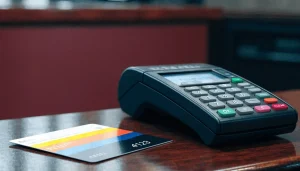
Deposits and withdrawals run on different clocks
Deposits are often authorised before a withdrawal could be completed. A card deposit may appear instantly, but a card payout can take several business days, according to a specialist review. The difference is not a contradiction: the deposit is a payment into the casino, while a withdrawal involves the casino releasing funds and the payment route delivering them.
This distinction matters when comparing casino payment claims. “Instant” may describe only the deposit, not the cash-out. A payment method’s name on a cashier page does not establish how quickly a withdrawal will clear. The relevant information is the stated processing time for each direction, plus whether the casino’s own approval stage is included.
For a withdrawal, the operator’s review comes first. Processing time can depend on internal approval and whether account verification is complete; a specialist review notes that first withdrawals may take longer while checks are carried out. Once approved, the funds still have to move through the selected payment route. An estimate that begins only after approval will not include the time spent waiting for the casino to release the payment.
Bank transfers and payout delays
Bank transfers have additional timing variables. A specialist payment review identifies cut-off times, weekends and currency conversion as factors that can affect delivery. A transfer submitted after a bank’s processing cut-off may not move through the same cycle as one submitted earlier. Weekends can also interrupt the working-day sequence, and conversion may add a step where the casino account and receiving account use different currencies.
Payment Timing
Timing varies by provider. Deposits are often instant, while withdrawals depend on casino approval and bank processing times.
The practical comparison is therefore between the full route and its separate stages: casino approval, payment-provider processing and bank delivery. An advertised transfer estimate may cover only one of them. Where the operator gives separate figures for approval and delivery, they should be read together rather than treated as competing promises.
What to check before relying on an estimate
The cashier or withdrawal page should clarify whether a displayed timeframe applies to deposits, operator approval or arrival in the receiving account. It should also state whether the estimate changes for a first withdrawal or an account still undergoing KYC. If the wording is unclear, the exact start point for the clock is unclear too.
A specialist payment review places PayPal, open banking and debit cards linked to fast payout systems among the quicker withdrawal routes, but individual casino processes still matter. A route that is fast after approval cannot remove an approval queue; a quick deposit cannot establish a quick payout. For a cash-flow comparison, the relevant measure is the time from submitting the withdrawal request to funds reaching the destination account, not the speed of the original deposit.
Deposit Limits and the Cost of Each Transaction
A deposit limit is not a single figure attached to a casino. The minimum may depend on the payment route, while maximums can be set per transaction, day or month and may also vary with account status. A specialist casino review reports minimum deposits in the £10–£20 range, but that is not a fixed market tariff: the cashier’s terms for the chosen method determine the amount available at the point of payment.

The displayed minimum is only the entry condition. It does not show what the transaction will cost after charges are applied. A specialist review identifies possible costs at several points: the casino, the payment provider, the card issuer or bank, currency conversion and, where relevant, the payment network. Whether any of these apply depends on the route and transaction, so a headline claim of “no fee” does not establish that the full movement of money is free.
Currency is a separate part of the calculation. The account currency should be checked before a deposit; if the payment is converted, the exchange rate may include a spread rather than a clearly itemised charge. A specialist review notes that this margin can outweigh a visible flat fee. The comparison therefore needs the amount leaving the bank or payment account and the amount credited to the casino account, not just the fee printed beside the method.
There is no universally cheapest route. For the same deposit amount, compare any casino charge, provider and bank fees, the conversion rate and network costs that apply to that transaction. A method with no stated casino fee may still produce a higher total cost if conversion is involved; a method with a visible charge may cost less overall if its exchange terms are better. The decisive figure is the net amount received after all applicable charges.
For a UK casino credit-card deposit, the amount question does not create an available option: UK-licensed casinos cannot accept credit cards for gambling. Deposit sizing and cost comparisons therefore concern eligible payment routes, with their minimums and maximums confirmed in the cashier before payment. A limit shown for one method should not be assumed to apply to another, and a displayed cap is not a promise that the account can use it.
Paying by Card: Ownership Checks and Payment Security
For a UK-licensed casino, a card payment must be eligible for gambling and belong to the account holder. Credit cards cannot be used to fund gambling there; a card logo on a cashier page does not change that restriction. For an accepted payment route, matching the casino account details to the payment account helps avoid ownership mismatches that can interrupt a transaction.
This is a practical control, not a promise that every payment will pass without review. Remote gambling licensees have anti-fraud and anti-money-laundering duties, so a casino may check who owns the account and where deposited funds came from. If the details do not align, the operator may ask for further KYC before processing a transaction. The time and effort then depend on what needs to be confirmed.
Closed-loop rules commonly mean that a payout is returned to the original payment source where possible. That links the outgoing funds to the route used to deposit, rather than treating the cashier as a set of interchangeable channels. If the original route cannot receive a withdrawal, another method may be offered, but the alternative can involve additional verification. Its availability should not be assumed from the deposit options alone.
The cleanest arrangement is often one named account used consistently for both deposit and withdrawal. A payment account in someone else’s name, or switching between accounts without a clear reason, can create questions that a matching account-and-payment record would avoid. That does not establish wrongdoing; it adds a verification issue for the operator to resolve.

Before making a casino payment by card, the relevant distinction is therefore ownership and eligibility, not simply whether the cashier displays Visa or Mastercard. A listed card brand does not make a credit card acceptable for gambling in the UK, and it does not confirm that a particular card product or account will be approved. Matching details reduces avoidable friction; it does not bypass the operator’s checks.
Playing Slots Without a Credit Card
A slot game does not have a separate payment exemption. At a UK-licensed casino, credit-card payments cannot fund gambling, whether the intended game is a slot or another casino game. The regulator introduced the ban on 14 April 2020, and it remains in force.
That applies to indirect routes as well as a direct card payment at the cashier. A payment service cannot be used to pass credit-card funds into gambling where its wallet permits those funds to be used for that purpose. Routing the payment through another account does not change what funded it.
For someone checking whether slots can be played using a credit card in the UK, the practical answer at a licensed site is no. A card logo, payment button or general claim about card acceptance does not establish that credit-card-funded gambling is permitted. The relevant distinction is the source of the funds, not the slot title selected after a deposit.
Slot play itself is also subject to rules separate from payment restrictions. In Britain, autoplay is prohibited and each online slot spin must last at least 2.5 seconds. The maximum stake per game cycle is £5 for adults aged 25 and over, and £2 for players aged 18 to 24. These controls apply to play, not to the payment route; meeting them does not make a credit-card deposit acceptable.
A slot balance funded through an eligible non-credit source is a different case from one funded by credit. Payment options vary by account and casino, so the cashier’s terms determine which routes are available. The credit-card restriction does not prevent slot play altogether; it rules out credit-card payments for gambling at UK-licensed casinos.
Why must withdrawals return to the deposit method?
Returning a payout to the original payment source is a common anti-fraud and anti-money-laundering control. Using a different route may mean extra verification.
What is the fastest withdrawal method for UK casinos?
PayPal, open banking services and debit cards linked to fast payout systems are generally among the quickest. The casino’s approval process and whether your account is verified also affect the timing.
Why can a fast payout casino still delay my withdrawal?
The casino must approve the withdrawal, and that internal process can take time. A first payout may take longer if verification is still being completed.
Do UK casino withdrawals require verification?
Verification can be part of the payout process, particularly for a first withdrawal. An account that is not fully verified may slow down payment.
Are Visa and Mastercard deposits definitely debit cards?
No. Visa and Mastercard are card brands, so a logo alone does not establish whether a card is debit or credit. UK-licensed casinos cannot accept credit-card funds for gambling; check that your specific card is eligible in the cashier.