
Check the cashier before choosing a payment route
 Available in GB
Instadebit availability can vary by account, so compare UK cashier options with deposit costs, bonus terms and withdrawal routes.

Instadebit Availability in UK Casino Cashiers
A casino’s payment information is useful only if it matches the options offered to a UK account at the point of payment. For Instadebit, the decisive check is the cashier itself: the method must appear as a selectable deposit option before it can be treated as available. A logo, an old payment page or a general reference to international banking services does not establish that an account can use it.
This matters because payment information can describe a broader service area than the one relevant to a UK customer. A payment-method page may be general, while the cashier presents the options for a particular market or account. The two should not be treated as interchangeable. If Instadebit is absent from the UK-facing cashier, a mention elsewhere does not make it a working route for that account.
Check the account-specific cashier
The useful sequence is simple: establish that the casino is available to UK customers, open its cashier and inspect the deposit methods shown there. If registration is required before the cashier can be viewed, the payment options can be checked after creating an account but before funding it. The point is to verify the named method before a deposit is attempted, rather than infer acceptance from a broad list.
Where Instadebit is displayed, the next step is to read the cashier’s own instructions for that option. The method name should be explicit; a bank-transfer label or a generic payment-service description is not proof that Instadebit is supported. Check the displayed transaction details and confirm the account currency before proceeding. A specialist casino review listing payment methods names Visa and Mastercard, but also cautions that current UK availability and card-product eligibility need to be checked in the cashier. That is a useful distinction: a published list is a lead, not an account-level confirmation.

A specialist review also reports GBP support on the supplied casino pages. Account currency still needs to be confirmed before the first transaction, since a mismatch can introduce conversion. Currency support and payment-method acceptance are separate checks: seeing GBP does not establish Instadebit availability, and seeing Instadebit does not establish that the account will transact in GBP.
What counts as confirmation
For a practical decision, confirmation means that Instadebit is visible as a deposit choice in the relevant UK cashier and that the casino provides instructions to complete the payment through it. A mention in a search result, a third-party review, a logo, or an undated page may be useful for locating information, but none replaces that check. Payment pages can change, and a casino’s own current cashier is the operational point at which the method either appears or does not.
The same care applies to wording. A site may describe a payment service in broad terms without naming Instadebit. That does not justify treating the service as an Instadebit route. Nor should a method be assumed compatible because it is available through another casino or in another country. The relevant evidence is specific to the casino and the UK account being used.

Registration, eligibility and the first payment
Checking before registration can save time when the casino publishes a clear UK payment page. If the available methods are shown only after sign-in, registration may be necessary to inspect them, but it does not require making a deposit. The cashier should be reviewed before money is committed. If Instadebit does not appear, the account has no confirmed Instadebit deposit route at that point.
A UK casino must also operate within the applicable licensing framework. Remote gambling licensees serving Great Britain require a UK Gambling Commission licence, and legal online gambling is restricted to licensed and regulated sites. Payment acceptance and licensing are separate questions: a payment logo does not establish that a casino holds the necessary licence. The licence should be checked on the Commission’s public register before depositing.
The phrase “Instadebit casino” therefore needs a narrow reading. It should mean a casino whose current UK cashier expressly offers Instadebit to the account in question, not one that merely mentions the name somewhere on its site. “Best” is not a substitute for this test; ranking a casino has no value if the named payment option cannot be selected. The same applies to claims about newly launched sites or mobile access: the payment method still has to be present in the relevant cashier.
A final check immediately before payment is prudent even when an earlier page showed the method. The cashier is the point where the operator presents the available choices for that transaction. If Instadebit is displayed there, its stated conditions can be assessed before continuing. If it is not displayed, the name elsewhere on the site does not complete the gap.
Payment Routes to Compare When Instadebit Is Unavailable
When Instadebit is not shown as a payment choice, the practical comparison is between the methods actually available in the casino cashier. For a UK account, the main differences are how a payment is authorised, whether it can also be used for withdrawals, and whether using it affects a promotion. A method’s name alone does not settle those conditions; the cashier and its terms do.
Debit cards
Visa and Mastercard debit cards are commonly accepted at UK casinos. A card payment is made through the card linked to the player’s bank account, rather than through an Instadebit account. That makes it a direct route, but the cashier still determines whether a particular card product can be used.
Credit-card payments for gambling are prohibited at UK-licensed casinos. The restriction also covers credit-card funds routed through a money service business, and operators cannot accept a wallet payment where that wallet allows credit-card funds to be used for gambling. A debit card should therefore be identified as a debit product, not assumed to be eligible because it carries a familiar card logo.

Deposits and withdrawals are separate checks. A card may appear in the deposit cashier without being the route used for a later payout. UK anti-money laundering controls commonly require funds to return to the original payment source, so the casino’s stated withdrawal route matters before a card is treated as a complete payment solution. Card availability can also depend on the account and the current cashier settings.
Bank transfer and open banking
A bank transfer moves funds from a bank account to the casino through the transfer route offered at checkout. Open banking services can initiate a payment through a bank connection rather than asking for card details. The exact steps depend on the service presented by the operator, so “bank transfer” does not describe one identical process at every cashier.
A specialist casino review reports that open banking and bank transfers can support instant deposits and fast withdrawals at many sites. That is a reported capability, not a timing commitment for a particular account: the bank, payment service and casino processing all affect the result. A transfer can also be affected by cut-off times, weekends and currency conversion, as specialist payment guidance notes. The quoted speed should therefore be read as route-level information, not as a guaranteed arrival time.
Bank-based routes may suit someone who prefers a direct connection to a bank account, but the deposit and payout terms should be checked independently. A cashier may offer an instant bank payment for deposits while setting out a separate process for withdrawals. The relevant comparison is the complete route, not the label attached to the deposit button.
Debit cards
Visa and Mastercard are commonly accepted, but the cashier determines specific eligibility.
Bank transfer
Includes open banking services which can support instant deposits and fast withdrawals.
Prepaid vouchers
Paysafecard is a deposit-only method and does not provide a withdrawal route.
E-wallets
Skrill and Neteller are available at some sites but may be excluded from promotions.
Prepaid vouchers
Paysafecard is a prepaid voucher used for deposits only. It can separate a casino payment from a direct card transaction, but it does not provide a withdrawal route. That distinction has a financial consequence: winnings cannot be paid back to the voucher through the same method, and the casino may require another route and additional checks for a payout.
A deposit-only method is therefore not interchangeable with a bank transfer or a card that may be part of a return-to-source process. Its usefulness depends on whether the available withdrawal method is acceptable and what verification that alternative requires. The voucher’s deposit function is clear; the rest of the money movement must be assessed separately.
E-wallets
Skrill and Neteller are available at some sites. Specialist casino reviews report that these e-wallets are often excluded from promotions, so a payment can be accepted while a related offer is unavailable. That is an eligibility condition to check in the promotion terms, not a reason to assume every casino treats either wallet the same way.

An e-wallet adds an account between the bank and the casino. That can make the payment route distinct from a direct bank transfer or card payment, but it does not remove the need to check ownership details, cashier availability or withdrawal rules. UK anti-money laundering controls can require returns to the original source, and alternative payout routes may involve further verification.
The comparison is consequently functional rather than a ranking. Debit cards are commonly accepted; bank transfers and open banking have reported fast-payment capability at many sites; Paysafecard is deposit-only; and Skrill or Neteller availability and promotion treatment vary by casino. The cleanest choice is the route whose deposit conditions, withdrawal handling and promotional terms all fit the account. If the cashier does not offer Instadebit, an alternative should be judged on those terms rather than on the similarity of its name or its advertised speed.
Deposits, Promotions and the Cost of a Small First Payment
A deposit has two separate prices: the amount taken from the payment account and the terms attached to any promotion. The cashier’s minimum determines whether a payment can be made; the promotion’s conditions determine whether that payment qualifies for an offer. Treating the two as one figure can make a small first deposit look more valuable than it is.
That distinction matters when looking for UK casinos that accept Instadebit and offer free spins or a no-deposit bonus. A payment method appearing in a cashier does not, by itself, establish that deposits made with it qualify for a promotion. Nor does a promotion’s headline establish that every payment route is eligible. The applicable offer terms and the cashier need to be checked together, before the transaction is made.
The same applies to claims about no-wagering bonuses or free spins without wagering requirements. Those labels describe promotional conditions, not a general feature of an Instadebit deposit. Eligibility can depend on the offer’s stated rules, so a method and an offer should not be treated as a matched pair unless the terms say so. A deposit may be accepted while a promotion is unavailable for that transaction; the payment and the offer are separate decisions.
Do
- Verify the method is visible in the UK-facing cashier
- Check the specific minimum deposit requirements
- Read the promotion terms for payment exclusions
Don't
- Assume availability based on a general website mention
- Treat a deposit-only method as a withdrawal route
- Assume all bonuses apply to every payment method
Payment-method exclusions are not merely small print when the offer is part of the calculation. A specialist casino review has reported that PayPal can be excluded from bonus eligibility, despite its popularity for speed and convenience. That is a report about the terms described by that review, not a rule applying to every casino. The specific promotion conditions remain decisive. A headline bonus has no cash value in the calculation until its eligibility requirements are satisfied.
The minimum deposit is another independent condition. One specialist casino review places typical starting minimums in a range of £10–£20, with the amount depending on the selected payment method. That range is a guide to the reported variation, not a fixed UK-wide tariff and not a promise that every cashier will accept either amount. The minimum shown for the chosen method is the operative figure for that account.
For a small first payment, the difference between the deposit floor and an offer’s qualifying threshold can matter. If a cashier permits a smaller payment than the promotion requires, the payment may go through without activating the offer. If the promotion excludes the chosen method, depositing more does not resolve that exclusion. The sensible calculation is therefore to identify the method-specific minimum, then check whether the exact offer accepts that method and amount. No larger deposit should be inferred from a bonus headline alone.
Searches for Instadebit casinos with no minimum deposit, real-money play without a deposit, or no-deposit free spins combine distinct conditions. A no-deposit offer, where one is stated, is not the same as a low minimum deposit: one concerns whether an initial payment is required for the offer, while the other concerns the cashier’s threshold for a payment. The wording of an offer must support the claim; the presence of Instadebit in a payment list does not establish a no-deposit promotion.
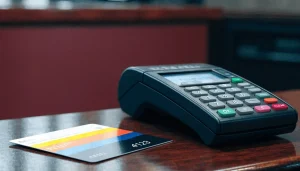
Before paying, the relevant checks are narrow: confirm that the account’s cashier offers the intended method, note its displayed minimum, and read the conditions for the particular promotion. This avoids counting a bonus that the payment cannot activate, or planning a payment below the applicable threshold. The first deposit is small only in cash terms; its effective value depends on whether the accompanying offer is actually available.
Using a Mobile Casino Cashier for Slot Deposits
A mobile casino cashier is the point at which a payment method becomes a usable option for the account. A method mentioned on a general payments page, or in a specialist casino review, is not confirmation that it is available for a particular UK customer’s deposit. The cashier should be checked while signed in and before a payment is started.
That distinction matters for searches about Instadebit and mobile slots. A casino’s mobile access does not establish that Instadebit is supported, and the presence of slots does not establish that they can be funded through that service. The cashier must show Instadebit as an available method for the account. If it is absent, a claim about online slots that take Instadebit does not resolve the practical question.
Payment details also need to match the method shown. A specialist review may list Visa or Mastercard, but that does not confirm current UK availability or eligibility for every card product. The cashier is the relevant check. In the UK, credit-card payments for gambling are prohibited; a card option should not be treated as permission to deposit using credit. Debit-card availability is a separate matter and still depends on what the account’s cashier displays.
On a phone, the useful check is narrow: open the account cashier, inspect the available deposit methods and their displayed conditions, then proceed only if the intended method is listed. If the cashier offers several routes, the method name and any account or payment details should be checked before confirming the transaction. A mobile layout may make information less visible, but it does not change the underlying payment conditions.
The same caution applies to “free” Instadebit slots. Free-play access and real-money deposits are different arrangements; a free game does not prove that Instadebit can be used for paid play. Nor does a slot’s availability on a mobile screen establish anything about the cashier’s payment support. For real-money slots, the payment route must be confirmed separately from the games available to the account.
A UK-facing gambling account must be operated under the applicable regulatory framework. Remote gambling licensees serving Great Britain require the relevant UK Gambling Commission licence, and customers must be aged at least 18 to gamble legally. Those points concern the operator and the customer’s eligibility; they do not verify a particular payment method. The cashier remains the account-level check for whether Instadebit, a card or another route can actually be used for a mobile deposit.
Real-Money Slot Deposits and the Withdrawal Route
A payment method for real-money slot play has two separate stages: money moving into the casino account and money moving back out. A deposit option can appear suitable for funding play, yet still be a poor fit if the withdrawal route is unclear. The relevant comparison is therefore not just whether a cashier lists Instadebit, but what happens to funds after a session and a withdrawal request.
UK anti-money laundering rules generally require winnings to be returned to the original payment source. This closed-loop approach means the route used to deposit can affect how a later payout is handled. A method presented as deposit-only cannot be treated as a complete payment solution for real-money play: another route may be needed, and that can involve additional checks.

For anyone considering slots with Instadebit, the cashier’s payment list is only part of the evidence. The account terms should also explain whether withdrawals can go back to Instadebit, whether another method is required, and how the casino handles a payment route that cannot receive funds. Those details matter before a deposit, not after a balance has accumulated. A label beside the deposit button does not settle the withdrawal question.
The timing can also differ between the two directions. A specialist review reports that a card deposit may arrive instantly while a payout can take several business days. That is a reported example, not a timetable that applies to every casino or payment. The practical point is that a quick way to fund slot play does not establish an equally quick way to recover funds.
The same distinction applies to searches for Instadebit slot games, slot machines or an app. A game is not itself the payment route: the casino cashier processes the deposit, while payout arrangements depend on the casino’s rules and the payment provider’s role. Free play also does not demonstrate that a method supports real-money deposits and withdrawals. A no-deposit offer, where one is advertised, would be a separate promotion with its own conditions; it does not establish that Instadebit is accepted or available for withdrawals.
A useful assessment records the full movement of money: the chosen deposit method, the stated destination for a payout, and any alternative route the casino may require. Account details and payment ownership should correspond to the same customer, reducing the risk of avoidable friction over whose funds are moving. Where the cashier or terms do not make the return route clear, the payment method has not been assessed fully. The deposit may be simple; the final amount received depends on the route that is actually available for withdrawal.
Withdrawal Checks Before Choosing a Deposit Method
A deposit method does not set the full withdrawal timetable. A payout may still be waiting for the casino’s internal approval, and the account’s verification status can affect when that review is completed. A specialist casino review identifies these as factors in withdrawal speed; they are reasons to check the operator’s stated process, not a fixed timing promise.

The first withdrawal can involve an additional pause while KYC checks are completed. This means a payment route that appears quick at the deposit stage may not produce an equally quick payout. The relevant distinction is between the casino approving the withdrawal and the payment provider then handling the transfer. These are separate stages, and a delay in the first stage cannot be solved by choosing a different deposit method.
For an Instadebit deposit, the same checks matter as for any other payment route. The method’s name does not establish how quickly a casino will approve a withdrawal, whether the account is fully verified, or what processing time the operator applies. Nor does the phrase “instant banking” settle those points: instant deposit processing and withdrawal approval are not the same transaction.
Before making a deposit, the casino’s cashier and payment terms should be read alongside its verification requirements. Account details and payment ownership should be consistent, and any requested KYC documents should be supplied through the operator’s stated process. A mismatch or an incomplete check may create avoidable friction at the point a withdrawal is reviewed.
A useful comparison therefore includes more than the deposit screen. It records the operator’s withdrawal procedure, what verification may be required, and whether the account has completed that process before play begins. The specialist-review account of longer first withdrawals is particularly relevant here: the first payout may take longer because verification is still under way, even where later transactions follow a different path.
No deposit method can remove the casino’s approval step. For a player choosing between Instadebit and another route, the practical question is not simply how quickly funds enter the account, but whether the casino has explained its checks and whether the account is ready to pass them.
Bonus Terms That Can Change the Value of a Deposit
A welcome offer is not part of the deposit balance unless its conditions are met. Payment-method exclusions can decide whether a promotion is credited at all, so the advertised bonus and the cashier method need to be checked as a single transaction.
A specialist review reports that PayPal can be excluded from bonus eligibility, despite its appeal for speed and convenience. The same type of review reports that Skrill and Neteller, where offered, are often excluded from promotions. These are not fixed rules for every operator: the promotion terms for the specific account must establish whether a payment made by the chosen method qualifies.
The calculation is straightforward. If an offer requires an eligible deposit and the selected method is excluded, the value of that offer for the transaction is zero. A larger headline figure does not correct that mismatch. Nor does a bonus code override written exclusions unless the operator’s terms say it does.
For an Instadebit deposit, no welcome bonus, slots bonus or no-deposit offer should be assumed from the method name alone. The relevant evidence is the promotion’s current wording: eligible payment methods, whether the offer must be claimed, and any conditions attached to bonus funds or winnings. If Instadebit is not listed clearly, eligibility remains unconfirmed; a code or banner is not a substitute for that detail.
The same check applies to real-money slots promotions. A bonus may be limited to particular games, or winnings may be subject to conditions that affect their eventual value. Those conditions belong to the offer, not to the payment brand. The cashier confirms what can be used for the deposit; the promotion terms determine whether that deposit earns the advertised benefit.
A useful comparison is therefore the amount paid, the bonus actually credited, and the conditions required before any bonus-related balance can be withdrawn. Where the payment method disqualifies the offer, the deposit should be assessed without the promotional amount. That leaves a cleaner comparison between the cash cost and the funds available for play, rather than treating a headline bonus as guaranteed value.

Minimums, Maximums and Deposit Controls
A specialist casino review places common starting deposit minimums in the £10–£20 range, with the exact figure depending on the payment method. That is a reported range, not a universal threshold or a promise that a particular cashier will accept a deposit at either amount. A £5 deposit should therefore not be assumed to work with Instadebit or any other method: the amount shown in the account’s cashier is the relevant minimum.
Maximums are less uniform. A specialist review reports that a casino may set separate caps for one transaction, a day or a month, and that the figures can depend on both the payment route and the customer’s account status. A displayed maximum is not necessarily the amount available to every account. The cashier’s current terms should be checked before a transaction is planned, especially where the intended deposit is close to a stated cap.
Deposit size is only one part of account control. UKGC requirements mean a remote operator must ask a new customer to choose a financial limit before the first deposit and make account-level limit settings accessible. This is a separate control from the cashier’s minimum and maximum: a payment can fall within the transaction range while exceeding the limit set on the account.
For an Instadebit deposit, the practical calculation is therefore conditional. The method must appear as available to that account, the proposed amount must meet its displayed minimum and remain within any applicable maximum, and the account’s own financial settings must permit it. None of those conditions establishes a standard £5 Instadebit minimum across UK casinos. The cashier and account controls determine the permitted amount at the point of payment.

Alternative Payment Names and What They Establish
Payment names can help narrow a comparison, but a method’s reputation or a change of brand does not establish that it is available at a particular casino. Nor does the presence of a payment option identify a casino’s games or show that any slot has special compatibility with it.
EcoPayz changed its name to Payz in 2022. The rebrand explains why both names may appear in older and newer material; it does not, by itself, confirm that a casino currently offers Payz. The relevant evidence is the method displayed for the account in that operator’s payment information or cashier. A historic reference to EcoPayz should not be treated as proof of current acceptance under either name.
Skrill has a broader stated presence: a specialist review of UK-facing casinos describes it as among the more widely used deposit methods in that market in 2026. That is a market-level observation, not a guarantee of availability at every site. It also establishes a deposit option only; it does not, on its own, confirm withdrawal support or promotional eligibility.
Jeton has a narrower footprint. A specialist review reports that it can still be found at a small number of UK online casinos in 2026. That supports the conclusion that the method has not disappeared entirely, but it is not evidence of general availability. A payment name in a list of possible options is not enough to establish that it is enabled for every customer or transaction.
For anyone comparing substitutes for Instadebit, these distinctions matter more than a “best alternative” label. Payz is the current name associated with EcoPayz; Skrill is described by a specialist review as widely used for deposits; Jeton is reported at only a limited number of UK casinos. None of those points ranks the methods by cost, suitability for slot play or ease of withdrawal. Those questions depend on the specific operator’s terms and the payment options actually offered. A name establishes identity or reported market presence—not the full conditions of use.

GamStop Status Cannot Be Inferred from a Payment Method
A casino’s cashier and its self-exclusion status are separate matters. Seeing InstaDebit listed as a payment option would not establish whether the casino participates in GamStop; equally, a claim about GamStop does not confirm that InstaDebit is available for deposits. No specific casino can be identified as meeting both conditions: outside GamStop and accepting InstaDebit.
That distinction also matters for legal status. Operators offering real-money gambling to customers in England, Scotland and Wales must hold the relevant UK Gambling Commission licence, wherever they are based. Offshore casinos without that licence operate outside the UKGC system. A statement that a site is “not on GamStop” does not, by itself, establish whether it is licensed to serve the British market.
UKGC-licensed casinos must provide responsible gambling tools, including self-exclusion. That requirement should not be confused with proof of participation in a particular scheme. Nor does a payment method tell anything about whether an account can be excluded through GamStop. Those details require separate confirmation from the operator and the relevant scheme.
For slot deposits, the same separation applies: an InstaDebit reference is not evidence that a casino offers particular slots, accepts UK customers, or has a particular self-exclusion status. A reliable assessment would need to establish the operator’s current UKGC licence on the Commission’s public register and confirm the payment option in that operator’s cashier. These checks answer different questions; neither substitutes for the other.
A list of UK casinos outside GamStop that accept InstaDebit would therefore be misleading without confirmation of both conditions for each named operator. The payment route alone cannot support that claim, and no operator should be presented as a match on that basis.
What is the fastest withdrawal method for UK casinos?
PayPal, open banking services and debit cards linked to fast payout systems are generally among the quickest options. The casino’s approval process and whether your account is verified also affect the timing.
Are Visa and Mastercard deposits definitely debit cards?
No. Visa and Mastercard are card networks, and their logos do not confirm that a particular card is a debit card. UK-licensed casinos cannot accept credit-card gambling payments, so check your card’s type and the cashier’s eligibility rules.
Can I use a credit card at 333 Casino in Great Britain?
No, if the casino is serving Great Britain under a UK Gambling Commission licence: credit-card payments for gambling are prohibited, including credit-card funds routed through a money service business.
Why must withdrawals return to the deposit method?
Returning funds to the original payment source is a common anti-fraud and anti-money-laundering control. Using a different route may require additional verification.
What is the current minimum deposit?
Minimum deposits usually start at £10–£20, depending on the payment method.
Are fast casino withdrawals guaranteed?
No. Withdrawal speed depends on the casino’s internal approval process and whether your account is fully verified; bank transfers can also be affected by cut-off times and weekends.