
Check Litecoin Support Before You Choose
 Available in GB
A general cryptocurrency listing does not confirm Litecoin is available to UK customers or shown in an account’s cashier.
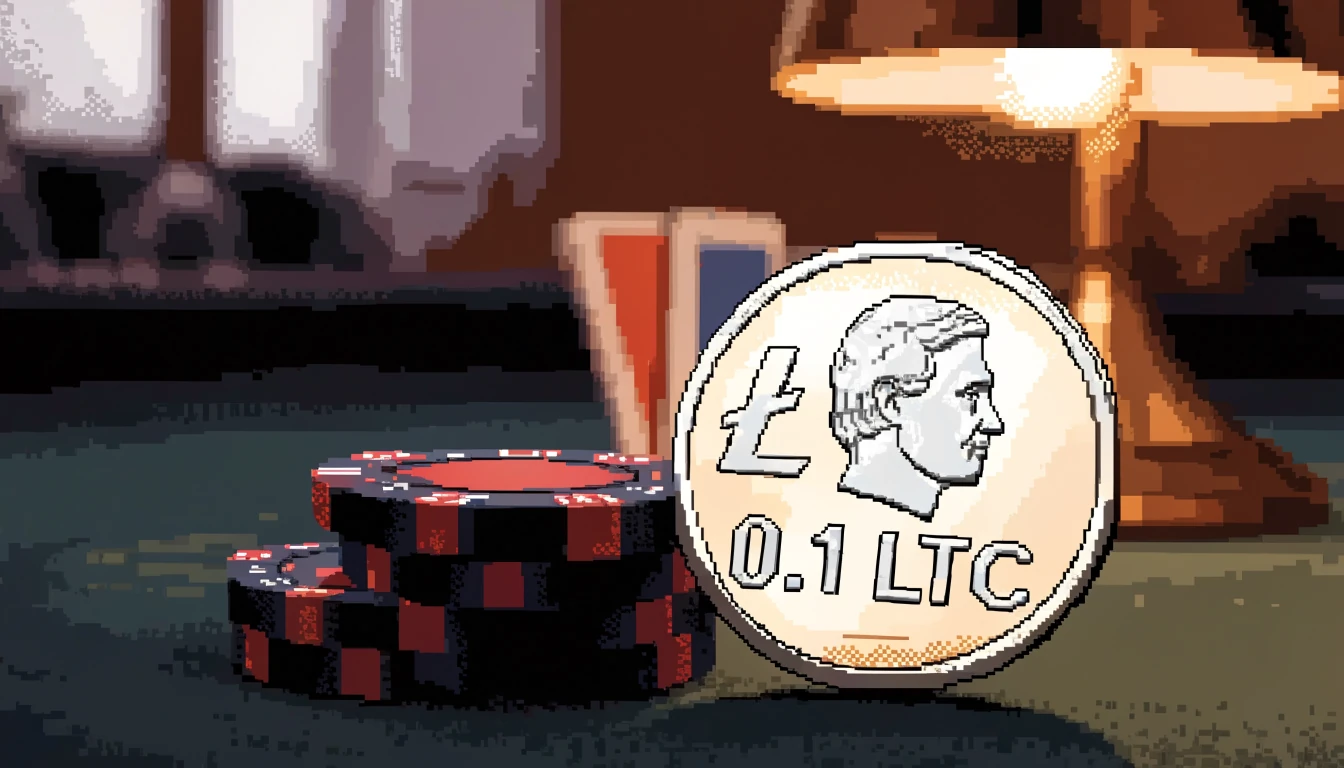
What Litecoin Availability Can—and Cannot—Be Confirmed
A casino’s mention of cryptocurrency is not, by itself, confirmation that it accepts Litecoin. A specialist review describes websites listing several cryptocurrencies alongside Visa, Mastercard, bank transfer and e-wallets. That is evidence of a broad payment category, not proof that Litecoin is among the supported assets at a particular casino.
The distinction matters because “crypto accepted” can cover different coins at different operators. A site may list Bitcoin or other cryptocurrencies without listing Litecoin at all. Even where Litecoin appears in a general payment summary, that does not establish that the option is live for UK customers, available to every account, or currently usable. Those are separate points to verify.
For casinos that accept Litecoin in the UK, the useful evidence is specific: the operator’s own current payment information should name Litecoin, rather than cryptocurrency as a category. The cashier is also relevant because it shows the methods presented to an account at the point of use. A broad claim on a promotional page carries less weight than a clearly named method in the operator’s payment details. If the information conflicts, the conflict is a reason not to treat support as confirmed.
This standard also applies to lists presented as the best Litecoin casinos, new Litecoin sites or places with Litecoin bonuses and games. A list is only as reliable as its operator-specific evidence. A casino’s name alongside a cryptocurrency logo does not prove that Litecoin is accepted; a bonus label does not prove that the coin qualifies for the promotion; and a games catalogue does not establish a payment method. Each claim concerns a different part of the service.
The distinction is particularly important for UK-facing sites. Remote gambling licensees offering gambling to customers in Great Britain must hold the relevant UK Gambling Commission licence, regardless of where the operator is based. Online gambling is legal in the UK at licensed and regulated sites. A cryptocurrency payment claim does not establish an operator’s regulatory status, just as a licence does not establish which payment methods its cashier offers. These checks answer different questions and should not be treated as substitutes.

Searches for Litecoin casinos on Android raise the same evidential issue. A site may offer mobile access to its casino while providing no confirmed Litecoin payment option. Device compatibility and payment support are independent features. A mobile page, app description or slot listing cannot establish that Litecoin is available in the mobile cashier. The method needs to be named in the payment information relevant to the UK account.
The wording of a payment claim should therefore be read narrowly. “Cryptocurrency accepted” supports only the general statement that some cryptocurrency payment option is described. It does not identify Litecoin. “Litecoin” named in a current operator payment list is more specific, but the listing still needs to match the customer’s jurisdiction and account. A stale review or a copied logo can outlast the availability it once described. That is not a technicality: the claim being assessed is present acceptance, not a history of past support.
The same care applies to claims about all Litecoin casinos in the UK. “All” requires a complete and current list, while payment options can change. A collection of sites described as crypto-friendly cannot establish completeness, and it cannot support a ranking of the best sites unless each entry has confirmed Litecoin availability. Where the operator’s own information does not clearly name the coin, the sound classification is unconfirmed—not accepted.
A practical comparison can record the operator, the exact payment wording and where that wording appears. It should also record whether the information is directed at UK customers and whether it is current. This keeps broad cryptocurrency references separate from explicit Litecoin support. It avoids turning an inference into a recommendation.
The defensible conclusion is limited but useful: UK-facing casino material may refer to several cryptocurrencies, yet that description alone cannot confirm any particular Litecoin-accepting casino. Confirmation depends on an operator-specific, current statement naming Litecoin for the relevant UK service. Until that standard is met, claims about the best, newest or bonus-bearing Litecoin casinos remain unsubstantiated; cryptocurrency in general is not Litecoin in particular.

Deposits and Withdrawals: Check the Full Payment Route
A payment method shown in a casino cashier is not automatically a complete route for moving money in and out. The deposit screen may show what an account can fund with; withdrawal rules determine where an approved balance can be sent. Those are separate conditions. For a Litecoin deposit, the relevant check is not only whether the cashier accepts it, but whether the operator’s terms explain how a withdrawal would be handled.
UK anti-money laundering rules generally require a payout to be returned to the original payment source. This closed-loop approach helps establish where deposited funds came from and where returned funds are going. It is also a common anti-fraud control. A different payout route may be considered, but it can bring extra verification rather than serving as an automatic substitute.
That distinction matters when considering whether Litecoin can be used at a UK-facing casino. A deposit option, if displayed, would establish only that the operator permits that transaction at that point in the account process. It would not, by itself, establish that Litecoin is an eligible withdrawal method, that a payout can be sent to any crypto address, or that the operator will convert a balance into cryptocurrency. Each of those would need to be stated in the casino’s own payment and withdrawal terms.
Trace the route before depositing
The payment route has several stages: the method used to fund the account, the way the casino records the incoming transaction, the method permitted for a withdrawal, and any checks needed before funds are released. A route is only clear when those stages fit together. If the terms describe deposits but leave withdrawals unspecified, the payout destination remains unresolved.
For a proposed Litecoin transaction, the key information is whether the casino explicitly treats Litecoin as both a deposit and withdrawal method, and what conditions apply to that pairing. A general reference to cryptocurrency is not enough to establish that Litecoin is included. Nor does an option in a deposit menu answer what happens to a later withdrawal. The relevant terms should match the exact payment method and the account, not simply refer to digital payments in broad language.

The same principle applies if the casino proposes another route for paying out. Returning money by a different method may require the operator to establish ownership or review the transaction further. That can add steps, and the method might not be accepted at all. A payment route that looks workable at deposit stage can therefore leave a separate question at withdrawal stage.
What “return to source” means in practice
The original-source principle ties a payout to the method that supplied the funds. It is not a promise that every payment provider or asset can receive every type of casino withdrawal. The operator’s cashier and terms determine which routes are supported, while anti-money laundering checks inform how a payout is handled.
Where more than one funding method has been used, the operator may need to apply its own rules to the balance and payout. No universal ordering can be assumed from the fact that a casino accepts several payment types. The written withdrawal policy should explain whether funds are returned through the original route, whether another route may be required, and what verification applies if the original source cannot receive the payout.
This is particularly important where a payment method involves an account or destination separate from the casino account. The casino may need to confirm that the relevant payment source belongs to the same customer. A mismatch can create avoidable friction, while a request to use an alternative destination can prompt additional checks. The practical question is not whether an alternative sounds possible, but whether the operator authorises it for that account and transaction.
Separate acceptance from payout certainty
A casino’s payment page, account cashier and withdrawal terms serve different purposes. The deposit cashier can indicate an available way to add funds. The withdrawal section sets out how a balance can be paid. A promotional page or broad cryptocurrency label should not be treated as a substitute for explicit withdrawal terms.

For a Litecoin route, the account should therefore be assessed as a deposit-and-payout pair. If the operator identifies Litecoin only for deposits, the payout route is not established. If the terms allow withdrawals through another method, that alternative may involve ownership checks or other verification. If the terms do not explain the route, there is no sound basis for assuming that a Litecoin deposit can later be returned as Litecoin.
This is not a technicality about payment labels. The route determines whether funds can be returned to an eligible source under the operator’s procedures. Confirming the withdrawal treatment before funding an account avoids relying on a deposit option to answer a different question. A listed method can open the transaction; only the withdrawal terms show how it closes.
Payment Compatibility, Card Rules and Account Ownership
A payment method is usable only when the casino’s cashier accepts the specific product, the account holder is eligible to use it and the route is compatible with the account’s withdrawal arrangements. A logo on a payment page is not enough to establish all three conditions. This distinction matters when comparing Litecoin with card payments: the presence of Visa or Mastercard does not make a bank card a Litecoin payment method.
UK casinos commonly accept debit cards, including Visa and Mastercard. A specialist review lists those card brands among the methods shown by the sites it assessed, but that is not confirmation that either is available at every casino now. The cashier is the relevant check for current UK availability and for whether a particular card product qualifies. Issuer restrictions, card type and the casino’s own settings can affect whether a displayed brand works for a given account.
Credit cards are a separate case. The regulator prohibited credit-card payments for gambling on 14 April 2020, and the rule remains in force. UK-licensed casinos cannot accept credit cards for gambling, including where credit-card funds are routed through a money service business. A card bearing a familiar brand should therefore not be treated as eligible simply because the brand appears in the cashier.
The same distinction applies to digital wallets. A wallet is not a workaround if it allows credit-card funds to be used for gambling: remote gambling operators cannot accept that payment route. The relevant question is not only which wallet is named, but how it is funded and whether its terms permit the proposed gambling transaction. A debit-card balance and a credit-funded wallet do not have the same regulatory status.
Litecoin raises a different compatibility issue. A casino may list cryptocurrencies generally without naming Litecoin, or may describe card payments without offering any cryptocurrency service. Neither detail establishes that a Litecoin deposit is accepted. Nor does a card linked to a cryptocurrency exchange turn a card transaction into a Litecoin transfer: the cashier must identify and support the actual payment method. Claims about Litecoin debit cards should be treated cautiously unless the operator’s own payment information specifies the method and the transaction is available in the account.
Compatibility also depends on ownership. Account details and the payment instrument should belong to the same customer. Using a payment route registered to someone else can create avoidable questions about who supplied the funds and who is entitled to a later payment. Matching the account holder’s name across the casino account and payment account reduces that basic source of friction; it does not override the operator’s checks or make an unsupported method acceptable.
Before treating any route as available, the cashier should show the method for the relevant account and the operator’s terms should clarify its permitted use. The method must also be checked for both deposits and withdrawals before being described as a complete payment option. A deposit button alone does not settle whether the same route can receive a payout, and a general reference to cryptocurrency does not settle whether Litecoin is included.

For UK play, the operator’s status is part of the eligibility check, not a substitute for checking payment compatibility. Remote gambling licensees serving the British market must hold the relevant UK Gambling Commission licence. Payment branding cannot establish that status, just as a licence does not establish that a particular card or cryptocurrency is supported. The practical result is a two-part check: confirm that the casino is authorised to serve the market, then confirm that the exact payment product is accepted for the account and transaction.
Mobile Slots Do Not Confirm Mobile Litecoin Payments
A casino’s mobile site and its cashier are separate parts of the service. Slots may run on a phone or tablet while the cashier offers a different set of payment methods, or applies different conditions to deposits made there. Mobile access to casino games, therefore, does not establish that Litecoin can be used to fund play.
The distinction matters for searches about Litecoin slots on mobile. A game’s presence in a mobile lobby says nothing about the currency or payment route accepted by the operator. Nor does a cryptocurrency symbol elsewhere on a site prove that Litecoin appears in the mobile cashier. Payment support has to be checked as a cashier function, not inferred from the game catalogue or the site’s general mobile compatibility.
The same separation applies to desktop play. A slot may be available to play for real money without having any connection to Litecoin as a payment method. “Litecoin slots” can describe a player’s intended way to fund an account, but it is not a distinct class of slot machine. The game outcome and the payment rail are separate components; one does not verify the other.
A mobile cashier should be assessed on its own terms. The relevant details are whether Litecoin is explicitly listed for the account, whether the listed option is available on the device being used, and whether the currency and transaction conditions match the intended deposit. A general cryptocurrency label is not enough to establish support for a specific coin. Likewise, an option displayed on a payment-information page may not be available to every account or through every interface.
Claims about free play need the same care. A free-play mode does not demonstrate that deposits in Litecoin are accepted, and it does not make a game Litecoin-compatible. Free access and real-money funding describe different conditions. A game can be available without a deposit, while the payment method used for a real-money account remains a separate question.
For a UK-facing casino, the mobile experience also sits within the rules that apply to the operator and the game. Remote gambling licensees serving Great Britain must hold the relevant UK Gambling Commission licence. Online slots have a maximum stake per game cycle of £5 for customers aged 25 and over, and £2 for those aged 18 to 24. Slot autoplay is banned in Britain, and each spin must last at least 2.5 seconds. Those restrictions concern lawful slot play; they do not confirm any particular mobile payment option.
The practical test is narrow: mobile slot availability confirms only that games can be accessed on a mobile device. Litecoin support is a separate cashier claim and should be treated as such. Keeping those two checks apart prevents a working mobile lobby from being mistaken for proof of a Litecoin deposit route.
Real-Money Slot Play and Withdrawal Timing
A quick deposit and a quick withdrawal are separate stages. An amount appearing in a casino balance does not establish how soon a real-money slot win can be paid out. The withdrawal still depends on the casino’s review and the status of the account.
A specialist review describes card deposits as potentially instant while payouts can take several business days. That comparison is useful because it separates the time taken to fund an account from the time taken to release funds. It does not establish a timetable for Litecoin withdrawals, or for any particular casino.
DO
- Verify the withdrawal route in the operator's terms.
- Check the method specifically for your account.
DON'T
- Assume a deposit method is also a withdrawal method.
- Rely on general cryptocurrency labels.
Withdrawal processing includes the operator’s internal approval. The casino may also need to complete KYC, with first withdrawals taking longer when verification is still outstanding. An account that has not been fully verified can therefore affect the payout timeline even when the deposit itself went through without delay. A displayed processing estimate should be read as conditional on the operator’s checks, not as a guaranteed arrival time.
For real-money slot play, the relevant figure is not simply the time from deposit to account balance. It is the time from submitting a withdrawal request to funds being released, including any review still required. A casino’s payment page may describe a method as fast, but that label does not by itself disclose how long the internal approval takes or whether additional KYC is pending. The useful comparison is between the stated processing conditions and the account’s actual verification status.
This distinction matters to searches for Litecoin slots and other cryptocurrency-based real-money play. A site’s general cryptocurrency wording cannot establish that Litecoin is accepted, and a fast crypto deposit claim cannot establish the speed of a later payout. The cashier and withdrawal terms need to identify the relevant method and explain the stages that apply. Without that method-specific information, a precise Litecoin payout expectation is not supported.
Free-play access is a separate matter: it does not show that real-money deposits or withdrawals are available through Litecoin. Likewise, a slot being playable on a site does not establish which payment methods can fund play or receive winnings. The game, deposit method and withdrawal process are distinct parts of the transaction.
The practical calculation is therefore conditional: deposit speed describes the funding stage; payout speed depends on internal approval and completed verification. Any estimate that omits those conditions gives only part of the timeline. A rapid deposit may put funds into play promptly, while the eventual withdrawal remains subject to checks and processing.
Depositing by Card, Bank Transfer or E-Wallet
A casino cashier may show several deposit routes, but that does not make them interchangeable or establish that Litecoin is accepted. UK casinos commonly take debit cards, including Visa and Mastercard. Some UKGC-licensed casinos also accept Apple Pay for deposits. The options visible in the cashier are the practical test: payment methods can differ between operators and may change.

Credit-card payments for gambling are not permitted at UK-licensed casinos. The ban took effect on 14 April 2020 and remains in force. A card labelled Visa or Mastercard therefore needs to be identified as a debit card, not assumed eligible from the network logo alone. This distinction matters when comparing card deposits with searches for Litecoin casinos; a card route is a separate payment method, not evidence of cryptocurrency support.
Bank transfer and open banking offer another route. A specialist review reports that these services can provide instant deposits and fast withdrawals at many sites. That is a description of the services covered by that review, not a guarantee for every casino or transaction. The cashier should identify which banking option is available and whether the account’s currency is supported before a deposit is made.
E-wallet availability is also operator-specific. A specialist review describes Skrill as one of the common deposit methods at UK-friendly casino sites in 2026, while Skrill and Neteller are available at some sites. Those statements concern the sites reviewed, not every UK casino. PayPal is another payment option at some operators, and Paysafecard is a prepaid voucher for deposits only. A deposit-only route should not be treated as a general-purpose wallet.
For someone looking for a Litecoin deposit, these established methods are alternatives to assess, not substitutes that prove a casino accepts Litecoin. Each has its own availability in the cashier; the presence of a bank transfer, card or e-wallet says nothing by itself about a cryptocurrency option. Nor does a deposit route establish that a casino offers Litecoin slot play or a Litecoin-specific promotion.
A useful comparison starts with the exact method named in the cashier, then checks whether it is available for the account and transaction being considered. For card deposits, that means distinguishing debit from credit. For banking, it means confirming the offered service rather than inferring it from a general bank-transfer label. For wallets and vouchers, it means checking the named provider and the route’s stated function. This keeps a payment choice grounded in the operator’s actual deposit options, rather than in a broad label such as “crypto-friendly”.

Bonus Eligibility Can Depend on the Deposit Method
A casino promotion and its payment rules are separate conditions. A welcome offer may be available to eligible new customers, yet a deposit made through a particular method may not qualify. For a Litecoin deposit, the relevant test is whether the promotion’s terms explicitly allow that method—not whether the cashier accepts the coin or the site advertises a bonus.
A specialist review reports that PayPal can be excluded from bonus eligibility, despite its appeal for speed and convenience. The same type of review reports that Skrill and Neteller are available at some sites but are often excluded from promotions. These are reported terms, not a rule applying to every casino: eligibility can differ by operator and offer, and the current promotion conditions take precedence.
The practical calculation is straightforward. A bonus has value only if the deposit method, account status and offer conditions all line up. If a Litecoin deposit is not an eligible payment route, the advertised welcome bonus does not change that. Nor does a bonus code override an exclusion in the terms. A code can identify an offer; it cannot make an excluded deposit qualify.
The same applies to no-deposit promotions. Their availability and conditions are set by the operator, and the label alone says nothing about whether a Litecoin user can claim one. Slot-focused wording also does not establish that a bonus applies to every game, or that a Litecoin deposit is accepted for the offer.
Before making a deposit for promotional value, the terms should be checked for eligible payment methods, excluded methods, any requirement to opt in, and the games covered. The cashier and bonus rules need to agree. If one permits Litecoin but the other excludes it, the deposit may still be accepted while the promotion is not credited. That distinction matters more than the headline bonus amount: a promotion that cannot attach to the chosen payment route has no usable value.
For a Litecoin welcome offer in the UK, the decisive evidence is therefore the operator’s current written promotion terms. General statements that a site supports cryptocurrency, or that it offers slot bonuses, do not confirm Litecoin bonus eligibility.

Minimum Deposits, Limits and Account Controls
A specialist review reports that minimum deposits at UK casinos start within a £10–£20 range, with the threshold depending on the payment method. That is a general guide, not a confirmed Litecoin minimum: a figure for another cashier option cannot establish the amount accepted for a crypto deposit. A £5 figure should not be treated as a Litecoin deposit threshold unless the casino’s own cashier states that amount for Litecoin.
The amount shown at registration or in a payment guide may not be the amount available for every route. The selected method, account status and the operator’s current settings can affect what the cashier accepts. The transaction screen is the relevant point of comparison: it should show the minimum and any applicable maximum before a deposit is submitted.
A specialist review also reports that maximum deposits may be set per transaction, per day or per month, and that the applicable ceiling can vary with both payment method and account status. Those limits should not be collapsed into one headline figure. A transaction cap does not necessarily describe the daily or monthly allowance, and an account-level restriction may differ from the method’s own limit.
UKGC rules require remote operators to ask new customers to set a financial limit before their first deposit and to make account-level limit controls accessible. These controls are separate from the cashier’s payment caps. A payment method may permit a particular deposit while the customer’s chosen financial limit prevents it; the lower applicable amount determines whether the transaction can proceed.
Age verification is also required before an operator allows a customer to deposit. A displayed minimum therefore does not by itself mean that an account is ready to transact. Deposit eligibility depends on the account being cleared for use as well as the payment option and its current limits.
For a Litecoin deposit, the useful figures are the minimum and maximum shown specifically for that method, alongside any account-level limits in force. General casino minimums, a limit shown for a different payment option, or an advertised instant deposit do not establish those Litecoin terms. The confirmed amount is the one the operator presents for the selected method and account.
Cost Calculation
-
1
Calculate the amount sent and any casino or provider charges.
-
2
Account for currency conversion rates and exchange-rate spreads.
-
3
Include any network fees for cryptocurrency transfers.
-
4
Determine the net amount that actually reaches the casino account.
Comparing Litecoin Alternatives by Their Actual Costs
A payment method cannot be called the best alternative to Litecoin on fees alone. The amount credited after a deposit depends on the full cost of moving and converting the money, not just the charge displayed by the casino.
A specialist payment-cost review identifies several possible components: a casino charge, a payment-provider fee, an issuer or bank fee, an exchange-rate spread and, for cryptocurrency transfers, a network fee. Which apply depends on the route and transaction. A method with no visible flat charge can still cost more if its conversion rate is less favourable; the spread may exceed the stated fee.
A useful comparison starts with the same intended deposit amount and currency. For each route, calculate:
- the amount sent;
- any casino, bank, issuer or provider charge;
- any conversion from pounds into another currency, including the rate used;
- any network charge where a cryptocurrency transfer is involved;
- the amount that reaches the casino account.
The final figure is the net amount credited, not the amount initially entered. If the account balance is denominated in pounds, a conversion at either end can change the result. The exchange rate and the account currency therefore matter as much as the headline fee.
There is no universal lowest-cost method. The comparison changes with the amount, the payment provider’s terms, the casino’s cashier charges and the currency route. A small fixed fee may weigh more heavily on a smaller transfer; a percentage-based spread can become more significant as the amount rises. Those are different cost structures, not evidence that one method is always cheaper.
The same arithmetic applies when comparing Litecoin with another available deposit route, but the routes are not interchangeable by default. A payment method must be offered in the casino cashier, and its applicable charges must be checked there and with the provider. A listed alternative is not a verified Litecoin substitute, and no slot’s availability establishes payment support.
The defensible comparison is the net cost for the actual transaction: all charges and conversion losses subtracted from the funds sent. Without those terms, a “best” label has no calculable meaning.
GamStop Status Does Not Verify Litecoin Payment Support
A casino’s position outside GamStop and its payment options are separate questions. A site may be described as not connected to GamStop, but that description does not establish that it accepts Litecoin. Nor does a Litecoin symbol or a general cryptocurrency reference, on its own, confirm that Litecoin is supported for a UK account.
The regulatory distinction matters. In Great Britain, remote gambling licensees selling to customers must hold a UK Gambling Commission licence, regardless of where the operator is based. A casino operating offshore without that licence sits outside the UKGC regulatory system. GamStop status does not change that requirement, and it cannot stand in for checking a casino’s regulatory position.
Payment claims require their own evidence. A list of cryptocurrencies may name Bitcoin or refer to digital currencies generally without identifying Litecoin. Even where Litecoin appears in a cashier or payment-policy page, the relevant terms need to apply to the UK-facing service and account. A label on a promotional page is not enough to establish that a deposit route is active or usable.
The phrase “Litecoin slots” also blurs two different things. Slots are casino games; Litecoin is a payment method. A casino may offer online slots without supporting Litecoin, and a payment option does not identify which games can be played with deposited funds. The two claims should not be treated as interchangeable.
For a practical check, the operator’s terms, cashier and payment rules should agree on the same points: whether the site serves Great Britain, whether it holds the required UKGC licence, and whether Litecoin is listed for the relevant account. If the evidence concerns only GamStop status, it answers none of the payment questions. If it concerns only cryptocurrency acceptance, it does not establish Litecoin support or regulatory status.
The distinction is especially important where self-exclusion is involved. GamStop is a self-exclusion scheme, not a payment directory or a regulatory licence. Treating a site’s absence from the scheme as proof of a Litecoin route confuses a restriction status with a transaction capability. Neither claim verifies the other.
What is the fastest withdrawal method for UK casinos?
PayPal, open banking services and debit cards linked to fast payout systems are generally among the quickest. The casino’s approval process and account verification also affect how quickly funds arrive.
Are Visa and Mastercard deposits definitely debit cards?
No. UK casinos commonly accept Visa and Mastercard debit cards, but check the cashier to confirm that your specific card product is eligible.
Can I use a credit card at 333 Casino in Great Britain?
No. Credit card gambling has been prohibited in Great Britain since 14 April 2020.
Why can a fast payout casino still delay my withdrawal?
The casino must first approve the withdrawal, and first withdrawals can take longer while your account is verified. An alternative payout route may also require extra checks.
Is Skrill available?
Yes. Skrill is available at some UK-friendly casino sites and remains a common deposit method, though it may be excluded from promotions.
Can I deposit in GBP?
Yes, GBP is supported. Confirm your account currency before your first transaction to avoid conversion.