
Check XRP support before choosing a casino
 Available in GB
XRP availability can vary by account, while payment routes may affect deposits, withdrawals, bonuses and payout timing.
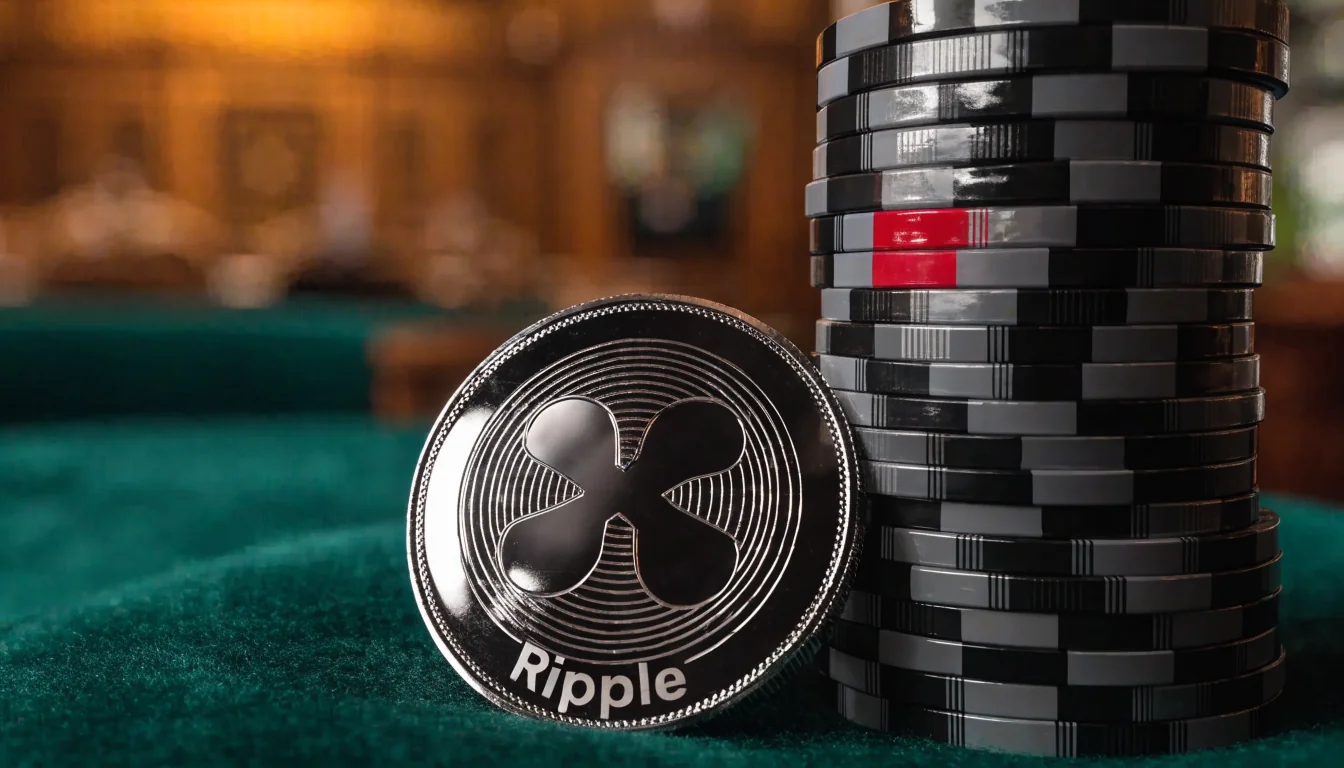
XRP Acceptance Is a Cashier Check, Not a Safe Assumption
A search for casinos that accept Ripple XRP in the UK can produce confident-looking lists. A list is not confirmation that XRP is available to a UK customer now. Payment pages can change, and a reference to cryptocurrency does not establish that XRP is among the currencies accepted, or that a particular cashier offers it to customers in Britain.
A specialist review of casino payment options may mention Visa, Mastercard, bank transfers, e-wallets and several cryptocurrencies. That describes what the review reports; it does not prove that every listed method is currently available in a given account. Nor does the word “crypto” identify a specific asset. Bitcoin support, for instance, cannot be treated as evidence of XRP support. The distinction is small on a page and decisive at the deposit screen.
The relevant check is the operator’s current cashier, viewed in the context of a UK account. A general payments page can be incomplete, out of date or written for a wider international audience. An XRP logo elsewhere on a site, a promotional page, or an old review does not establish that an XRP deposit can be selected. If XRP is not shown as a payment option in the cashier, acceptance has not been demonstrated.
Even a visible option needs to be read precisely. The cashier should identify XRP itself, rather than use a broad label such as “digital currency” or “crypto”. It should also set out the transaction terms and any applicable network details before a deposit is made. A similar-looking token, a different network or a third-party conversion route is not interchangeable with a direct XRP payment. The final amount credited should be clear before confirmation; otherwise the advertised asset and the account balance may not describe the same transaction.
A specialist review’s listing of Visa and Mastercard also needs the same restraint. Such a listing records what the review says, not necessarily what a UK customer can use today. Current availability and card-product eligibility must be checked in the cashier. In Britain, credit-card payments for gambling are prohibited, so a card brand appearing on a page does not mean every card product is eligible. A payment logo is a starting point for checking, not a transaction approval.

For an XRP claim, useful evidence is specific and current: the operator’s own cashier displays XRP for the relevant account, the deposit instructions name the asset and network, and the terms explain how the transaction is credited. Where the cashier is accessible only after registration, a public page alone may not settle availability. That limitation should be treated as unresolved rather than filled with a casino name copied from a third-party list.
The same standard applies to claims about new XRP casinos, Android access, games or bonuses. A site can be usable on Android without accepting XRP; a casino can offer slots without any verified link between those games and a crypto payment route. A bonus claim is separate again: it does not establish that XRP deposits qualify. Each claim needs its own current terms, rather than being inferred from a shared headline.
The phrase “best XRP casino” adds another unsupported layer. A ranking requires both confirmed XRP availability and criteria that can be compared, such as stated transaction terms. Without those, a ranked list presents confidence without a measurable basis. The same applies to an “all casinos” list: payment availability is not fixed simply because a directory was complete when it was written. For 2026, the year in a page title cannot keep a payment claim current.
For a UK-facing operator, the regulatory position is a separate check from the payment method. Remote gambling licensees serving the British market must hold a UK Gambling Commission licence. Checking the operator’s current entry on the Commission’s public register establishes whether it is licensed; it does not establish that XRP is accepted. Conversely, a payment page mentioning XRP is not evidence of a UK licence.
The practical distinction is between a reported possibility and a confirmed cashier option. Unless the UK account’s current cashier identifies XRP and shows the terms of that route, XRP acceptance remains unconfirmed. That is a narrower statement than claiming no UK casino accepts it—and a more useful one than publishing a list whose entries cannot be checked.
When XRP Is Not Available: Fiat Payment Routes
When a cashier does not offer XRP, the practical alternatives are conventional payment routes: debit cards, bank transfer or open banking, e-wallets, and prepaid vouchers. They do different jobs. Some connect directly to a bank account, some hold funds in a separate wallet, and one option in this group is for deposits only. The payment list is not interchangeable, and a method appearing at one casino does not establish that it is available at another.
Debit cards
Debit cards are among the familiar options at UK casinos. Visa and Mastercard are commonly accepted, but the relevant distinction is debit rather than credit. UK remote gambling operators cannot accept credit-card payments for gambling, including credit-card funds routed through a money service business. The ban has been in force since 14 April 2020 and has not been relaxed.
A card linked to a bank account can be a straightforward way to fund an account, subject to the casino’s cashier and the card issuer’s acceptance. The payment card should belong to the same customer as the casino account; matching ownership details reduce the chance of avoidable transaction friction. Card branding alone is not sufficient: current UK availability and the eligibility of a particular card product need to be checked in the cashier.
That distinction matters for digital wallets too. A wallet payment cannot be used where the wallet allows credit-card funds to be used for gambling. The name of a wallet on a payment page does not override the restrictions on the underlying funding source.

Bank transfer and open banking
Bank transfer and open banking routes move funds through a bank account rather than through a cryptocurrency network. A specialist review describes open banking and bank transfers as capable of supporting instant deposits and fast withdrawals at many sites; that is a report about the services it examined, not a guarantee for every casino or bank.
The route can suit customers who prefer a direct connection to their bank. Availability and the exact steps depend on the cashier’s listed services. A transfer may involve selecting a bank, authorising the payment through its own process, and returning to the casino account. Those details vary, so the cashier’s instructions determine what is actually offered.
Bank transfers also differ from a card payment in how they are initiated and processed. A listed bank-transfer option should not be assumed to mean every transfer format is supported. The payment screen identifies the available route and any requirements attached to it.
E-wallets
PayPal is valued for speed and convenience, according to a specialist review, but the same type of review notes that it may be excluded from bonus eligibility. That is a promotion condition to check at the individual casino, not a fixed rule for every PayPal payment. The wallet can be convenient as a separate payment account, but its presence in a cashier does not settle whether a particular offer applies.
Skrill and Neteller are available at some sites. A specialist review reports that these e-wallets are often excluded from promotions, so the payment method and offer terms need to be considered together before a deposit is made. Their availability should not be inferred from the fact that a casino accepts other e-wallets.
Debit Cards
Visa and Mastercard are commonly accepted, provided they are linked to a bank account and are not credit-based.
Bank Transfer
Includes open banking routes that can support instant deposits and fast withdrawals.
E-wallets
Services like PayPal, Skrill, and Neteller, though some may be excluded from specific bonus eligibility.
Prepaid Vouchers
Options like Paysafecard which are deposit-only and do not provide a route for receiving payouts.
A wallet adds an account between the bank and the casino. That can separate gambling transactions from ordinary card activity, but it also means that the wallet’s own funding rules matter. In the UK, a wallet that permits credit-card funds to be used for gambling cannot be used for that purpose. The relevant question is not only which wallet brand is displayed, but whether the permitted source of its funds complies with the gambling-payment restriction.
Prepaid vouchers
Paysafecard is a prepaid voucher and is deposit-only. It can therefore serve as a way to add funds, but it does not provide a matching route for receiving a casino payout. That limitation makes it different from a bank account, card, or e-wallet that may be part of a wider payment arrangement.
The voucher’s role is narrow: it funds the account, while any later withdrawal has to be handled through a route the casino permits. That distinction should be clear before the voucher is chosen. A deposit method is not automatically a complete payment solution.
Across these alternatives, the cashier is the operative source for what a particular casino accepts. A payment logo on a general information page can describe a broader service range, while the account’s cashier shows the routes currently presented for that transaction. The method’s function matters as much as its name: a bank route, wallet, card and deposit-only voucher do not offer the same kind of access to funds or promotions.

Deposits, Withdrawals and the Limits of Payment Compatibility
A payment method shown at the deposit stage is not automatically a complete route for moving money in and out of a casino account. That distinction matters when checking claims about casinos accepting Ripple XRP in the UK: a deposit option alone does not establish that XRP can also be used for withdrawals, or explain how any winnings would be paid.
The cashier needs to be checked in both directions. Before depositing, the relevant questions are whether the method is available for the account, whether it accepts deposits, and whether the operator permits withdrawals back through it. If XRP appears in a payment list, that still leaves the withdrawal route to confirm. If it does not appear, a page or advert making a general acceptance claim is not enough to establish that it is currently supported in the cashier.
The original-source rule
UK anti-money laundering controls generally require a casino to return funds to the original payment source. This is part of closed-loop handling: the deposit route can determine where a withdrawal is sent, rather than simply serving as a convenient way to put money into the account. Returning funds to their source is also a common anti-fraud measure.
The practical result is that payment compatibility belongs to the whole transaction, not one half of it. A method that can fund an account may be unsuitable as the sole route if it cannot receive a payout. Where a payment provider cannot accept the return, the operator may need to use another permitted route or request additional checks. The available route can depend on the casino’s own payment rules and the details attached to the account.
This is especially relevant to a cryptocurrency claim. “XRP accepted” can refer only to a deposit function unless withdrawal support is separately stated and confirmed. It does not by itself establish that withdrawals are paid in XRP, that a different currency is not involved, or that a customer can choose any destination wallet. Those details should not be inferred from a logo or a short payment-method description.
Account ownership and verification
The account holder’s details and payment account should match. Using a payment route that belongs to the same customer reduces avoidable friction caused by basic ownership mismatches. A withdrawal to a different person’s account is not a safe workaround for a method that cannot receive returns; ownership checks and anti-money laundering controls remain relevant.
An alternative payout route can also trigger further verification. Specialist casino reviews report that a first withdrawal may take longer while verification is completed, but the operator’s own terms and account status determine the process. KYC is therefore part of payment compatibility: a method may be listed, yet funds may not be released until identity or payment ownership has been checked.
Before a deposit, the operator’s payment terms should identify whether the chosen method is deposit-only, whether payouts must return to the same source, and what happens if that source cannot receive them. The cashier should then be checked against those terms. A generic statement that a casino accepts XRP does not settle any of these operational points.
The cleanest route is one named account used consistently for deposit and withdrawal, provided the cashier supports both functions. If that condition is not met, the deposit may be easy while the payout route remains unresolved. Payment compatibility is established only when the casino’s rules, the customer’s verified account details and the available withdrawal method fit together.
Mobile Slots: Check the Payment Route Separately
A slot opening on a phone does not establish that the account can be funded with XRP. The game interface and the cashier are separate parts of the service: mobile access concerns where the game runs, while payment acceptance is determined by the options presented for that account. A mobile-friendly slot page is therefore not evidence of Ripple support.

The distinction matters when assessing claims about XRP mobile slots in the UK. A page may describe slots as playable on mobile without confirming that XRP appears as a deposit method. Nor does a cryptocurrency logo or a general reference to digital-asset payments confirm that XRP is supported for a particular customer. The relevant check is the cashier on the operator’s current site, not the device used to open the game.
A specialist review may list Visa and Mastercard among a site’s payment options, but those listings do not settle current UK availability or whether a particular card product is eligible. The cashier is the point at which those details need to be checked. The same standard applies to a claim that slots can be paid for with XRP: it needs to match the payment options actually displayed, rather than a broad description of mobile play.
The word “mobile” can refer to different things: a game that fits a phone screen, a site viewed through a mobile browser, or an operator’s app. None of those descriptions, by itself, confirms a payment method. A mobile app should not be treated as an XRP wallet, and a slot available through an app should not be assumed to accept cryptocurrency directly. Payment, where supported, is handled through the operator’s account and cashier arrangements.
There is also a difference between trying a slot in a free-play mode and making a payment to an account. A free-play screen does not demonstrate that XRP is accepted for deposits, and it says nothing about whether a real-money account offers that route. The game’s presentation and the account’s funding options answer separate questions.
In Britain, online slots are subject to play rules regardless of whether they are viewed on a phone or another device. Autoplay is not permitted, and each online slot spin must last at least 2.5 seconds. Those requirements concern how the game operates, not which payment methods appear in a mobile cashier.
For mobile slots, the practical test is narrow: confirm the operator’s UK status, open the account cashier, and check whether XRP is explicitly available for the relevant transaction. A mobile layout, app listing or free slot demo cannot substitute for that confirmation.

Real-Money Slots and the Cost of a Slow Payout
A real-money slot session has two separate cash-flow points: the money leaving the account to fund play, and any balance later moving back out. A quick deposit settles only the first. It does not establish when winnings will reach a bank account or other destination, so the time between those events matters when measuring how much working money remains available.
A specialist review describes a card deposit as potentially instant, while a payout may take several business days. That is a source-specific comparison, not a timetable that applies to every casino or card. The practical point is narrower: the balance can be available for play before a withdrawal has completed. A player who treats the deposit speed as a guide to the payout speed is counting two different processes as one.
With real-money slots, the distinction affects the amount that can be reused elsewhere during the wait. A displayed casino balance is not the same as funds received in a bank account. Until a withdrawal arrives, it cannot be counted as cleared money for other expenses. The distinction is particularly important when a session is being assessed by its net result: the account balance may show a win, while the cash position remains unchanged.
Bank transfers introduce their own delivery variables. A specialist review notes that cut-off times, weekends and currency conversion can affect transfer delivery. These factors sit between a requested payout and its arrival; they are not evidence that a casino has approved the transaction or that a particular slot pays out faster. If conversion is involved, the final amount received may also differ from the amount requested, depending on the exchange rate applied.
The same arithmetic applies to a search for slots playable with XRP: a payment label or a real-money slot offer does not, by itself, establish the time or route for receiving a payout. No particular XRP-funded slot or payout arrangement can be inferred from the fact that a casino offers real-money play. The deposit, play balance and withdrawal are separate stages, and each needs a clear operational description before the full cash cycle can be assessed.
Do
- Check the operator's current cashier for XRP availability
- Verify if the withdrawal route matches the deposit method
- Confirm the operator holds a UK Gambling Commission licence
Don't
- Assume a crypto logo implies XRP support
- Treat a deposit-only option as a complete payout solution
- Infer bonus eligibility from the presence of a payment method
For a payout calculation, the useful figure is not simply the amount shown after a winning session. It is the amount ultimately credited, considered alongside the time it takes to arrive and any conversion that applies. A fast entry point can coexist with a slower exit; the slot result and the cash received are therefore not the same measure.
Deposit and Withdrawal Timing: Approval Comes First
A payment route associated with fast withdrawals does not determine when funds arrive. The casino must first review and approve the withdrawal, and the account’s verification status can add another stage. A fast transfer after approval cannot compensate for a request that is still waiting for internal checks.
One specialist casino review identifies PayPal, open banking services and debit cards connected to fast payout systems as methods generally associated with quicker withdrawals. That is a comparison of payment routes, not a promise of a particular arrival time. The casino’s own processing arrangements and the status of the account remain part of the calculation.
KYC is therefore relevant to timing, not merely account setup. If verification is incomplete when a withdrawal is requested, the casino may need to complete those checks before releasing funds. First withdrawals can take longer while this process is carried out. A fully verified account removes that particular source of delay, but it does not remove the casino’s approval stage.
The practical distinction is between three points: submitting a request, casino approval and receipt by the payment provider or bank. A status showing that a withdrawal has been requested does not mean that it has been approved, and approval does not itself confirm that the funds have reached the destination. Each stage can affect the final wait.
For XRP-related searches, phrases such as “direct withdrawal” or “instant banking” should not be treated as evidence of a faster payout. The relevant timing depends on the operator’s process and the account checks; a payment label alone cannot establish either. Nor does an apparently fast deposit indicate how quickly a withdrawal will be handled.

Comparisons are most useful when they distinguish casino processing from delivery after release. If the cashier or withdrawal terms give separate stages, those are more informative than a single broad claim about speed. If the account is not fully verified, the expected timeline may change once the casino requests or completes its checks. The sound estimate is therefore conditional: a method may be associated with faster payouts, but approval and verification still govern when the withdrawal moves forward.
Bonuses Depend on the Payment Method
A welcome offer is not automatically available with every deposit route. The bonus terms determine whether a payment method qualifies, and the cashier’s list of accepted methods does not answer that question. A method can be available for funding while being excluded from a promotion.
A specialist casino review reports that PayPal may be excluded from bonus eligibility. Specialist reviews also report that Skrill and Neteller are often excluded from promotions. These are not fixed rules across every operator: the applicable terms can differ by casino and offer. The useful check is the promotion’s payment-method clause, not an assumption based on the payment brand.
That distinction matters when assessing an XRP-related offer. A page describing a welcome bonus, a bonus code or a no-deposit promotion does not establish that XRP qualifies. Nor does a casino accepting a cryptocurrency for deposits prove that a bonus applies to it. The offer must specify the eligible payment routes, and XRP must be included there before the promotion can be treated as available for an XRP-funded account.
The financial value also depends on the conditions attached to the offer. A headline bonus is not the amount that can be withdrawn immediately: wagering requirements, eligible games, expiry conditions and maximum cash-out terms can change the eventual value. These clauses should be read alongside payment exclusions. If a deposit method is excluded, meeting the other conditions does not make the promotion eligible.
A bonus code adds another condition, rather than removing one. Its terms may specify which deposits qualify and whether a particular payment method is accepted. Entering a code or seeing a promotional message is not confirmation that the payment route qualifies; the account’s bonus terms and cashier rules need to agree.
For XRP slots promotions, the same distinction applies whether the offer is described as a welcome bonus, a no-deposit bonus or a code-based deal. Those labels describe how an offer is presented, not whether XRP is eligible. Without explicit confirmation in the operator’s current terms, the bonus value should be counted as zero in the deposit calculation. That is the only figure that does not depend on interpretation.
Minimum Deposits, Limits and the Final Amount
A low advertised minimum is not a general promise about every payment route. A specialist review gives a typical starting range of £10–£20, with the amount depending on the selected method. The cashier’s displayed minimum is the relevant figure for a particular account and transaction; a figure quoted for one route should not be carried over to another.
That distinction matters when considering a £5 deposit or a small XRP deposit. Neither a low amount nor a particular currency establishes that XRP is accepted, or that an XRP transaction can be made at that amount. The payment method and its minimum need to be shown in the casino cashier before any deposit is treated as available. A mobile device does not change the cashier’s limits.
The maximum is a separate calculation. A specialist review notes that operators can set maximum deposit limits per transaction, per day or per month, and that these can vary with the payment method and account status. The usable amount is therefore the lowest applicable ceiling: the method limit, any period-based cap and any restriction attached to the account. An account’s previous deposit capacity is not proof that the same ceiling applies to another method or later transaction.
UKGC rules also put a control before the first deposit: remote operators must prompt new customers to set a financial limit. Account-level limit controls must remain accessible. This is not the same as the payment provider’s transaction ceiling. The operator’s limit governs what can be deposited under the account settings; the cashier and payment route determine whether a particular transaction falls within their own limits.
- Confirm XRP is explicitly listed in the account cashier
- Verify the specific network and transaction terms
- Check if the chosen method is eligible for bonuses
- Ensure the withdrawal route is confirmed and compatible
The final amount available to deposit is consequently not just the minimum shown beside a payment logo. It depends on the selected method’s current minimum and maximum, the account’s applicable limits, and the financial limit set for the account. Where those figures do not align, the smallest permitted ceiling controls. A quoted minimum cannot establish a maximum, and a listed XRP option cannot establish either amount unless the cashier displays the terms for that route.
Payment Alternatives: Compare the Full Cost
The cheapest way to fund a casino account cannot be identified from a payment-method name alone. A route may carry a casino charge, a provider fee, an issuer or bank fee, a currency-conversion spread or, for cryptocurrency, a network fee. The amount retained after those costs is the useful comparison; the advertised deposit amount is only the starting figure.
A specialist payment review identifies these as possible cost layers, not a fixed tariff shared by every operator or provider. Charges depend on the route and transaction, so the comparison has to use the actual amount being sent. A flat fee is visible, but it is not necessarily the largest deduction: an exchange rate with a wide spread can cost more than a stated transaction charge.
Currency choice is part of the calculation. Casino pages may display GBP support, but the account currency still needs confirming before the first transaction. If the casino account and payment route use different currencies, conversion may occur at more than one point. The rate applied, as well as any separate fee, affects the final value credited. A displayed pound amount therefore does not establish that the transfer itself is cost-free.
For an XRP alternative, the same accounting principle applies. A cryptocurrency route can involve a network charge and conversion costs, alongside any casino or provider fees. A fiat payment method may avoid that particular network component but still incur bank, issuer or currency costs. Neither category is automatically cheaper; the result depends on the full route and the amount transferred.
A practical comparison records each charge before the transaction: the casino’s stated fee, the provider’s charge, any bank or issuer cost, the exchange rate or spread, and any network fee. Then compare the total deduction for the same amount and currency. If one part of the cost is not disclosed before payment, the final amount cannot be reliably compared in advance. No payment label settles the calculation.
XRP and Non-GamStop Claims: What Can Be Verified
A claim that a casino accepts Ripple XRP and a claim that it is not connected to GamStop describe different things. The first concerns a payment option; the second concerns the site’s relationship with a self-exclusion scheme. Neither claim proves the other, so they need separate checks.
For casinos that accept Ripple XRP in the UK, a general reference to cryptocurrency is not enough to establish that XRP is currently available. Payment methods can vary by site and account. The cashier should identify XRP specifically, and the terms should explain how the option works. A search result or promotional label is not a substitute for those details.
“Not on GamStop” is also not a measure of licensing. Remote gambling licensees serving customers in Great Britain must hold the relevant UK Gambling Commission licence. A site’s description of its GamStop status does not establish that it is licensed. The licence number can be checked against the Commission’s public register before depositing; claims about XRP or GamStop should not be treated as proof of that status.
UKGC-licensed remote operators must also provide account-level financial controls. Before a new customer makes a first deposit, the operator must prompt them to set a financial limit, and accessible controls must remain available through the account. Those requirements apply to licensed operators; they do not show whether a casino is connected to GamStop, nor do they establish that XRP is accepted.
The practical distinction is straightforward: check licensing, GamStop status and XRP availability as separate conditions. A casino cannot be classified as a non-GamStop XRP option on the strength of one label alone. If any of those conditions is unclear, the claim remains unconfirmed, not a basis for a deposit.
What is the fastest withdrawal method for UK casinos?
PayPal, open banking and debit cards linked to fast payout systems are generally among the quickest options. The time also depends on the casino’s approval process and whether your account is fully verified.
Which payment methods are accepted in Great Britain?
UK casinos commonly accept debit cards such as Visa and Mastercard, bank transfers or open banking, and e-wallets. Some also offer Paysafecard for deposits only; check the casino’s cashier for its current options.
Is Skrill available?
Yes, Skrill is available at some UK-friendly casino sites and is a common deposit method. It may be excluded from promotions.