
Check the operator before choosing a table
 Available in GB
A clear look at UK licensing and why a polished table or remotely hosted equipment does not establish authorisation.

Blackjack Casinos in the UK: Check the Licence Before the Table
A blackjack table does not, by itself, establish that the casino operating it is authorised to serve customers in Great Britain. The relevant distinction is the operator behind the site: remote businesses offering gambling to consumers in Great Britain must hold the appropriate licence from the UK Gambling Commission. The Commission regulates commercial gambling in Great Britain and covers remote gambling offered to people there, even when the equipment used to provide it is located elsewhere.
That makes the licence a more useful starting point than the game menu. A site can present blackjack clearly, describe its tables and display a polished interface; none of those features answers whether its operator is within the British regulatory system. For online casinos, the regulatory question attaches to the business offering gambling, not simply to the individual game or the place where a server is hosted.
The Commission regulates gambling activity across the United Kingdom, including online casinos. Its specific remit over remote gambling offered to consumers in Great Britain does not depend on the operator keeping its key equipment in Britain. A business cannot avoid the licensing requirement merely by locating the technical infrastructure abroad. For someone comparing blackjack casinos in the UK, the operator’s status therefore matters more than its claimed location or the appearance of its website.
What the licence relates to
The Gambling Commission grants operating licences to businesses and personal licences to individuals who carry out relevant roles in the industry. These are different forms of authorisation: a business’s operating licence is the central question when assessing the company providing an online casino, while personal licences relate to individuals working in specified capacities. A company name, a brand name and an individual’s authorisation should not be treated as interchangeable.
A casino brand may not make the legal entity behind the service immediately obvious. The name on a site’s pages can differ from the name used in a regulatory record, so the licence check needs to connect the business named on the register with the operator actually offering the gambling. A reference to the Commission, or an image resembling an official mark, is not a substitute for confirming the operator’s entry and licence details in the public register.

The register is the public record to use for that confirmation. Before depositing, the licence number should be checked against the UK Gambling Commission’s register, with attention to whether the listed business corresponds to the casino being considered. This is a matter of identifying the party responsible for the service, rather than relying on a general statement that a site is “regulated”. A number displayed on a page has value only if it leads to a matching record.
The distinction is important because a remote casino may be accessible online without being licensed to serve Great Britain consumers. Accessibility describes whether a site can be reached; it does not establish that its operator has the authorisation required for the British market. For a blackjack online casino, the presence of the game is not evidence of a UKGC licence, and a foreign address is not an exemption from the requirement when the business serves consumers in Great Britain.
The practical boundary
A UK-facing casino offering blackjack is therefore defined, in regulatory terms, by more than its games or branding. The business must be identifiable, its operating authorisation must be relevant to the service, and the public record must support the claim that it is licensed. The Commission’s role is not confined to land-based venues or to gambling conducted on equipment physically located in Britain; it also regulates remote gambling offered to consumers in Great Britain.
This is why the licence check belongs before the table rather than after a disagreement or payment problem. It establishes whether the operator is subject to the British licensing framework. It does not predict the outcome of a hand, make a particular casino financially attractive, or turn an offer into good value. Those are separate questions. The licence settles a narrower but prior point: whether the business has the required authority to offer remote gambling to the relevant customers.
DO
- Check the operator's licence in the UK Gambling Commission register
- Verify the business name matches the regulatory record
- Confirm the operator is authorised to serve the British market
DON'T
- Rely on a general statement that a site is “regulated”
- Assume a site is licensed because it features a logo or a reference to the Commission
- Use a website's appearance as evidence of regulatory status
The description “UK blackjack casino” can cover a range of brands and interfaces, but it should not blur the regulatory test. The Commission is the sole regulator for commercial gambling in Great Britain, and a remote operator serving consumers there must hold the relevant licence. A blackjack selection is a product feature; the operating licence is the evidence that the business is authorised within the market’s regulatory structure.
That check should remain separate from decisions about how much to wager. Gambling carries the possibility of loss, so only money that can be afforded to lose should be put at risk. A licence is a regulatory condition, not protection against losing a stake or a promise of a particular result.
Assessing a Blackjack Casino Without an Unverifiable “Best” Claim
Calling a site the best blackjack casino in the UK does not establish that it is licensed, that its terms are clear or that its tables suit a particular player. A useful assessment starts with evidence that can be checked: the operator’s legal identity, its entry on the UK Gambling Commission’s public register and the conditions attached to the account and games. A ranking cannot replace any of these checks.
The register matters because remote operators offering gambling to consumers in Great Britain must hold the relevant Gambling Commission licence. Before depositing, the licence number shown by the casino should be checked against the Commission’s register. The listed business name and the casino brand should be traceable to one another; a familiar logo or a licence statement in the site footer is not, by itself, confirmation. A mismatch is a reason to pause rather than to fill in the gaps with assumptions.
A dated public-register check, current to 26 September 2026, found no LuckyPays entry under that brand or its stated domain, including luckypays.io. That is a narrow finding about what the register identified on that date, not a general verdict about every business using a similar name. The practical point is that a casino’s claims should be compared with the regulator’s own record, using the operator identity and domain rather than the marketing label alone.

What can be compared
Once licensing has been verified, the remaining comparison is about terms, not a universal winner. A blackjack casino can be assessed through the information it publishes before registration and deposit. The account conditions should make clear who operates the service, which rules apply to the account, and where complaints can be raised. UKGC licensees must provide an internal complaints process and access to an approved Alternative Dispute Resolution service. Those routes are part of the operating framework, not optional signs of good customer service.
Financial controls also have practical value. Remote operators must prompt new customers to set a financial limit before their first deposit and make account-level limit controls accessible. A casino’s published information should explain how those controls work and where they can be changed. Responsible gambling tools, including self-exclusion, must also be available at UK-licensed casinos. These are measurable features of account management; a claim that a site is “player friendly” is not.
Payment terms deserve the same scrutiny as account terms. UK-licensed casinos cannot accept credit cards for gambling, and operators cannot accept wallet payments where the wallet permits credit-card funds to be used for gambling. The stated payment methods should therefore be read alongside the restrictions, rather than treated as a promise that every route will work for every account. A clear explanation reduces uncertainty; it does not turn a payment method into a reason to deposit.
For blackjack itself, published table information can be compared only where it is specific enough to verify. The rules and conditions attached to a table matter more than broad claims about quality. If a casino does not explain material conditions plainly, the lack of clarity is itself part of the assessment. A polished presentation cannot supply missing terms.
A decision based on evidence
The phrase “best online casino for blackjack” suggests a single answer, but the relevant criteria differ between players. One may prioritise straightforward account conditions; another may care more about the choice of tables. Neither preference establishes regulatory status. The sensible order is fixed: confirm the licence and operator identity first, then assess published terms and features against the intended use.
No ranking can establish that a casino will produce a profit. Nor does a high position on a comparison page prove that a particular operator is suitable. The useful test is whether each material claim can be checked against the casino’s own terms or the regulator’s record. Where the evidence is specific, it can be weighed. Where a claim is only promotional, it carries no measurable value.

Account access has its own conditions. Operators must verify a customer’s age before allowing a deposit, and online gambling is legal for adults aged 18 and over at UKGC-licensed sites. That requirement does not make every site displaying an age statement licensed; it belongs alongside the register check, not in place of it.
The final assessment should remain conditional: licensed status verified, terms understood, account controls available, and the casino’s claims supported by something more than its own headline. The site may then be compared with alternatives on criteria that matter to the player. No “best” label can remove the need to read the conditions. Only gamble with money that can be afforded to lose.
Live Blackjack Tables: Dealers, Formats and the UK Selection
A live table brings a human dealer into an online casino through a video stream. The dealer handles the cards at a physical table, while the player views the action on screen and submits wagers through the game interface. That arrangement differs from a digital blackjack game in which software deals the cards without a streamed dealer. The table may look more like a casino floor, but the stream does not change the underlying fact that play takes place online.
For a live dealer blackjack casino, the practical distinction is the format of the table, not a promise of a different result. The camera shows the dealer and the cards; the interface provides the controls for joining a round and placing a wager. A player follows the action from the stream and uses those controls to take part. The result is still a casino game, rather than a private arrangement with the dealer.
The range of live tables can extend beyond blackjack. A UK-facing online casino may group several card and casino games in a live area, with separate tables and interfaces for each. Blackjack is one option; other offerings may include card games or roulette. The presence of multiple tables gives a player a choice of format and game, but does not establish that every casino carries the same selection. Availability is operator-specific, and a title or table should not be assumed to be present without checking the actual lobby.

Grosvenor provides a dated example of how that range developed. It first unveiled live casino games in 2013, with Blackjack, Texas Hold’em and Roulette among the games offered. The example is useful as a record of a live casino launch, rather than evidence that every current UK operator offers those same tables. It also shows that a live casino area need not be limited to one game or one type of table.
The interface is part of the format. A table view can show the dealer, cards and game controls together, while the player’s actions are entered digitally. Those two parts—the physical dealing and the online controls—make the live experience distinct from a standard computer-generated game. Table names and presentation can vary between operators, so the label “live blackjack” alone says little about the full selection or how its tables are arranged.
A live dealer blackjack casino UK search should therefore lead to a comparison of actual table availability, rather than an assumption based on the words “live” or “casino”. A lobby can be checked for blackjack tables and for any other live games listed alongside them. The stream itself does not verify who operates the site: a live format is a product feature, not proof of regulatory status. Before depositing, the operator’s licence number should be checked against the UK Gambling Commission’s public register.
The dealer is part of the presentation; the table terms and the operator remain separate matters. A streamed table may make the dealing process visible, but it does not turn a wager into a predictable return. The financial boundary remains the amount placed at risk: only money that can be afforded to lose should be used for gambling.
How Casino Blackjack Works—and What a Win Can’t Be Guaranteed to Do
Casino blackjack is a card game built around a comparison: each hand is measured against the game’s target, and the dealer’s hand provides the other side of the result. A player’s aim is to finish closer to that target than the dealer without going over it. Reaching the target does not by itself promise a return; the dealer’s outcome still matters, and the table’s stated rules determine how particular results are settled.
How a hand is played
A hand begins with cards dealt to the player and dealer. The player then chooses whether to take another card or keep the current total. Taking another card can improve a hand, but it can also push it beyond the target and end that hand as a loss. Keeping the total avoids that immediate risk, although it may leave the dealer with the stronger result. Once the player’s decisions are complete, the dealer follows the table’s procedure and the hands are compared.
A hand begins with cards dealt to the player and dealer. The player then chooses whether to take another card or keep the current total. Taking another card can improve a hand, but it can also push it beyond the target and end that hand as a loss. Keeping the total avoids that immediate risk, although it may leave the dealer with the stronger result. Once the player’s decisions are complete, the dealer follows the table’s procedure and the hands are compared.
The sequence is straightforward; the uncertainty is not. A decision changes the hand being played, not the cards already dealt or the dealer’s eventual result. Even a choice that appears sensible from the information available can end in a loss. Conversely, a winning hand does not prove that the decision behind it was sound. One outcome is not a reliable measure of the quality of a decision, just as one favourable result does not establish a repeatable route to profit.
That distinction matters when considering how to win at casino blackjack. There is no guaranteed method that converts each hand into a positive return. The game involves choices, but those choices operate within chance and the table’s rules. A sequence of wins cannot be promised, and a losing hand cannot be reversed by confidence in the next one. Any account of the game that treats a decision as a certain payout has skipped the part where the dealer’s hand is revealed.
Table rules are therefore part of the result, not fine print to be ignored. They set the procedure for the dealer and the settlement of hands. Online versions present those rules alongside the game, and they may differ between tables. The displayed rules explain how a particular game handles a hand; they do not remove the uncertainty inherent in the comparison.
A specialist review states that Great Britain’s online slot stake limits do not apply to blackjack or roulette. That is a distinction about the scope of those slot rules, not evidence that blackjack has no other conditions, nor a way to improve the chance of winning. It should not be read as a blackjack table limit or as a promise about what a player can stake. Those are separate questions from how a hand is decided.

A blackjack result is a settlement of one hand under one table’s rules. It is not a forecast of the next hand, and a win does not guarantee continued profit. The financial measure remains the amount put at risk against the amount returned, considered over the play that actually occurred—not the feeling that a favourable decision ought to pay. Gambling should be limited to money that can be afforded to lose.
Blackjack Games Alongside the Rest of the Live Casino Floor
Blackjack sits within a broader live casino selection, rather than defining the whole table-games area. A casino’s live lobby may place it beside other card and casino games, allowing the range to be considered as a collection rather than as a single product. The useful comparison is about what is available and how the catalogue is organised, not about treating one title as a substitute for another.
Grosvenor provides a historical example of this mixed offer. When it first introduced live casino games in 2013, its selection included Blackjack, Texas Hold’em and Roulette. The combination shows how blackjack can appear alongside both another card game and a familiar casino table game. It does not establish what any present-day operator offers; a past launch is evidence of a range at that time, not a current catalogue.
For a player comparing live casino games, the names in a lobby matter because they define the available choice. Blackjack remains the central option for someone seeking that game, while titles such as Texas Hold’em and Roulette indicate that the floor extends beyond it. That distinction is practical: an extensive blackjack selection and a broad live casino catalogue are not the same claim. A catalogue can include several game categories without making every category equally prominent.
The layout also affects how the range is understood. A dedicated blackjack area can make that game easy to find, while a wider live casino lobby may group it among other table titles. Labels and categories are useful descriptions of the catalogue, but they are not evidence of the quality or suitability of a particular game. The content itself is the relevant measure: which games are listed, and whether the selection matches the intended type of play.

This broader view keeps the blackjack casino game in context. It is one part of the live casino floor, with card and other casino games forming the surrounding range. Grosvenor’s historical launch illustrates that mix through Blackjack, Texas Hold’em and Roulette, without implying that every UK-facing casino has the same selection. The appropriate comparison is therefore the actual game list at the operator being considered, rather than an assumption based on the label “live casino.”
The range can be described accurately without turning it into a promise. Blackjack may be the focus, but the adjoining catalogue can contain other table games; the specific selection depends on the operator and should be checked in its lobby. A wider menu is a matter of variety, not a measure of likely returns. Gambling should be limited to money that can be afforded to lose.
Playing Online Blackjack: Account Checks and Practical Conditions
Starting an online blackjack session involves account checks before any money reaches the table. A remote operator serving consumers in Great Britain must hold the relevant Gambling Commission licence. Before depositing, the operator’s licence number should be checked against the Commission’s public register; a casino’s own statement about its status is not a substitute for a register entry.
Age verification is also a pre-deposit condition. Operators must verify a customer’s age before allowing funds to be deposited into a gambling account. An account may therefore require identity details or documents to be checked before it can be funded. The practical point is straightforward: registration does not necessarily mean the account is ready for play.
A licensed operator must also prompt new customers to set a financial limit before their first deposit and make account-level limit controls accessible. These are part of the account setup, not optional decorations around the blackjack lobby. The limit is a control on deposits or account activity according to the operator’s tools; it does not make gambling profitable or remove the possibility of loss. Only money that can be afforded to lose should be used for gambling.
- Verify the operator's licence via the UKGC register
- Complete age verification
- Set a financial limit before the first deposit
- Ensure account-level limit controls are accessible
Payment access has its own restrictions. UK-licensed casinos cannot accept credit cards for gambling, including credit-card funding routed through a money service business. They also cannot accept wallet payments where the wallet allows credit-card funds to be used for gambling. A payment method appearing in an account menu is not proof that every funding route is permitted.
Once an account is open, licensed casinos must provide responsible-gambling tools, including self-exclusion. They must also offer an internal complaints process and access to an approved Alternative Dispute Resolution service. These provisions matter when an account issue cannot be resolved through ordinary support; their existence is a condition of licensed operation, not a promise that every dispute will be decided in the customer’s favour.
“Free play” and real-money play are different account propositions. If a casino offers a free-play mode, it can allow a game to be explored without a real-money wager, but it does not establish that a funded account has passed age or identity checks. Nor does a free mode confirm that the operator is authorised to serve Great Britain customers. Licence verification, age checks and account controls remain the relevant conditions before depositing for online blackjack.
Blackjack Strategy: Keep the Calculation Separate from the Stake
A blackjack strategy is a framework for making decisions, not a forecast of the final result. It can help keep choices consistent, but consistency does not turn a casino game into a predictable source of income. No strategy described here establishes a guaranteed win.
That distinction matters because two calculations are often blurred together. One concerns what to do during play; the other concerns how much money is exposed. A decision framework addresses the first. It cannot make the amount staked safe, recover a loss, or promise that a session will finish ahead.
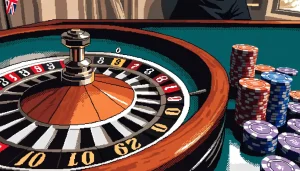
Online blackjack can make the pace of decisions feel orderly: the table presents a choice, and the player selects an action. That structure is not evidence that the outcome is under control. A live table adds a dealer and a streamed format, but the presence of a person dealing does not change the limits of a strategy. Neither setting turns decisions into certainty.
For a practical review, the relevant questions are modest. Is the approach understood before play begins? Can it be followed without changing it impulsively after a loss? Does the planned stake remain within money that can be afforded to lose? These checks do not improve the odds by themselves; they keep a strategy from being confused with a spending plan.
A strategy also needs a stopping point. Without one, the amount committed can expand in response to results, while the original plan becomes irrelevant. Treating a loss as a reason to increase the next stake is not a calculation of expected profit; it is a change in exposure. The same applies to treating a short run of wins as evidence that future outcomes are owed.
For UK players, the term “blackjack casino strategy” should therefore be read as a method for organising choices, not as a product feature with a financial return attached. Claims of guaranteed profit require evidence that a decision framework alone cannot supply. The sensible accounting line stays clear: strategy governs decisions; the stake determines how much can be lost. Only money affordable to lose belongs in play.
Live Blackjack in 2026: What the UK Stake-Limit Rules Actually Cover
For live blackjack in a UK-facing online casino, the key distinction is the type of game. The stated Great Britain stake caps concern online slots; they are not a general ceiling for every game available in a casino. A specialist gambling review describes the slot limits as £5 for each game cycle for adults aged 25 and over, and £2 for adults aged 18 to 24.

That classification matters when a live table is compared with a slot. A streamed blackjack game remains blackjack, even when it is presented through an online casino alongside slot games. The same specialist review says the slot caps do not extend to blackjack or roulette. Those figures therefore cannot be used to calculate a maximum blackjack wager, and they do not establish what limits a particular table may set.
The figures also refer to a slot game cycle, not to a casino account balance or a live-table wager. Applying them to blackjack would mix two different categories. A live blackjack table may display its own wagering conditions, but the slot figures do not describe those conditions. Any table-specific terms need to be read as table terms rather than inferred from rules for slots.
This is a narrow scope clarification, not a claim that live blackjack has no limits. It establishes only that the cited slot caps are not blackjack caps. Nor does the distinction turn blackjack into a lower-risk option: the amount wagered can still be lost. The appropriate financial calculation remains the amount that can be lost without affecting essential spending.
In a live blackjack online casino in 2026, the useful comparison is therefore between the game category and the terms attached to its table, not between a blackjack wager and the slot caps. The age bands and per-cycle amounts belong to online slots. Blackjack and roulette sit outside that specific limit, while any separate conditions for a blackjack table must be assessed on their own terms.
A larger permitted wager, where a table allows one, is not evidence of a better expected return or a safer choice. The category distinction says what the cited rule covers; it says nothing about whether a stake is affordable. Only money that can be lost should be wagered.
Blackjack Casino Bonuses: Read the Conditions Before Counting the Value
A blackjack bonus is not cash simply because its headline is expressed as a monetary amount. Its practical value depends on the conditions attached to it and on whether the resulting balance can be used and withdrawn under those terms. The offer and the rules governing it need to be read together.

For a casino blackjack bonus offer, the relevant checks are the qualifying deposit, which games count towards any stated requirement, whether blackjack play contributes in full or at all, and what conditions apply before winnings become withdrawable. The terms should also be checked for an expiry date, a maximum withdrawal, or restrictions on changing a wager while the promotion is active. If any of these conditions is unclear, the headline figure is not enough to calculate the value.
A no-deposit blackjack bonus needs the same scrutiny. The absence of an initial deposit does not by itself establish that the bonus can be withdrawn, or that blackjack is an eligible game. Any play-through requirement, game restriction and withdrawal condition should be stated in the offer terms. Without those details, a no-deposit label describes the entry point, not the final amount available to the customer.
The calculation is therefore conditional: start with the amount actually credited, then account for the qualifying games and any requirements that must be met before withdrawal. If blackjack is excluded or contributes differently from other games, the advertised offer may have little relevance to a blackjack session. A bonus that cannot be used on the intended game has no practical blackjack value, regardless of its headline.
In Great Britain, remote operators serving consumers must hold the relevant licence. A promotional offer does not change that requirement; the operator’s status and the bonus terms are separate checks. The offer should not be treated as a substitute for confirming that the business is permitted to serve the market.
Promotional funds can also affect the amount at risk, but they do not remove the possibility of loss. Any blackjack play should be limited to money that can be afforded to lose, and a bonus should not be counted as guaranteed income.
Casino Blackjack Rules: The Boundary Between Table Games and Slots
The relevant distinction in UK casino rules is between online slots and table games. A specialist casino review reports that Great Britain’s online slot stake limits do not cover blackjack or roulette. That is a statement about the scope of those limits, not evidence of a separate blackjack limit or a universal rule for every table and operator.
This matters because a slot restriction cannot be transferred to a blackjack wager simply because both games appear on the same casino site. The classification of the game, rather than the casino’s overall product range, determines whether that particular slot rule is relevant. Blackjack remains a table game for this comparison; roulette is another example identified in the same review.
The distinction should not be stretched further. It does not establish what stakes an individual blackjack table accepts, whether a casino imposes its own table limits, or what other conditions apply to a game. Those details depend on the table and its published terms. Nor does the absence of the slot limit mean that blackjack is free of all gambling regulation. It means only that the specified online slot stake restriction is not the rule governing blackjack.
For anyone comparing casino blackjack rules in the UK, the useful check is therefore narrow: identify whether the game is a slot or a table game before applying a rule written for slots. A headline about online slot limits says nothing by itself about the permitted wager at a blackjack table. Table-specific terms remain a separate matter, and the operator’s rules should be read for the game being considered.
Keeping these categories separate prevents a common error in interpreting casino rules: treating a restriction on one product as though it applied across the entire casino. Blackjack and slots may sit beside each other on a gaming platform, but proximity is not a regulatory category. Any wager should remain within what can be afforded to lose.
What are the online slot stake limits in Great Britain?
The limit is £5 per game cycle for adults aged 25 and over, and £2 for adults aged 18 to 24. These limits do not apply to roulette or blackjack.
Are online casino games licensed and regulated?
Yes. The UK Gambling Commission regulates online gambling, and remote operators serving consumers in Great Britain must hold the relevant licence.
Is LuckyPays licensed by the UK Gambling Commission?
The Commission’s public register dated 26 September 2026 does not show a LuckyPays entry under that brand or its stated domain, luckypays.io.
How do I check if an online casino is licensed in the UK?
Check the casino’s licence number and operator name against the UK Gambling Commission’s public register. Confirm that the listed business is the one actually offering the casino.