
How to verify Revolut acceptance before a casino deposit
 Available in GB
Acceptance varies by casino cashier and card product, while payment routes, limits and bonus eligibility can affect deposits and withdrawals.

Revolut Acceptance Depends on the Casino’s Cashier
A casino’s payment page can indicate that card payments are available without confirming that a Revolut-linked card will work for a particular account. Acceptance depends on the options presented in the casino cashier and the card product the operator permits. A logo on a general payments page is not a transaction result.
For a current check, the useful reference is the cashier reached after signing in and completing the account details required by the operator. Payment information shown before registration may be general, incomplete or out of date. The cashier gives a more relevant view of the methods enabled for that account, but even a displayed card option does not prove that every card issued under a particular brand will be eligible. Eligibility is checked when the transaction is submitted.
Read payment summaries as indications, not confirmation
A specialist review may list Visa and Mastercard among a casino’s payment options. That is a useful lead, not a guarantee of current UK availability or acceptance of every card product carrying those brands. The cashier is the place to confirm whether the option is actually offered. If it is absent, the review does not establish that it can be selected by a UK customer.

This distinction matters because payment acceptance has more than one layer. The casino may support card payments in general, while the available card route or the specific card product is not accepted for the account. A brand name alone settles neither question. The applicable terms and the live cashier need to agree before the payment is treated as available.
The check should also be made against the account that would be used to play. A payment option shown on a public page, an old review or another person’s account is not evidence of what will appear in a separate customer’s cashier. Casinos can change the options they offer, and payment information can remain visible elsewhere after the live selection has changed.
Keep account details and payment ownership aligned
The name and account information on the casino profile should correspond to the customer details associated with the payment route. Matching ownership information reduces the chance that a basic identity discrepancy will create avoidable friction during a transaction. It does not guarantee acceptance, but it removes one straightforward reason for a payment to be questioned.

A mismatch should not be treated as a minor formatting issue to work around. Where the casino requests information to confirm ownership, the account holder needs to be able to provide details that relate to the payment method being used. The casino’s own requirements determine what information is needed; assumptions based on a card’s appearance are not a substitute.
The cashier check is therefore more than a search for a familiar logo. It confirms what the operator currently offers to the account, while the account and payment details establish whether the selected route belongs to the same customer. These checks answer separate questions and should not be collapsed into one.
Confirm the account currency before transacting
Payment availability and account currency are also separate. A specialist review may state that a casino supports GBP, but that statement does not confirm the currency assigned to every account. The account currency should be checked before the first transaction. If it is not GBP, conversion may enter the payment calculation.
The relevant detail is the currency displayed for the casino account, not merely the currency in which a payment page advertises its figures. Checking it beforehand makes the transaction basis clearer and avoids assuming that a UK-facing site automatically holds the account in pounds. If the cashier or account settings do not make the currency clear, the operator’s payment information should be checked before proceeding.
Currency confirmation does not establish that a Revolut-linked card is accepted, just as card acceptance does not establish that the account is denominated in GBP. One check concerns the available payment route; the other concerns the unit in which the casino records funds. Both affect whether the transaction matches the intended arrangement.
A practical acceptance test
The evidence should be read in order: the signed-in cashier shows whether a card option is currently offered; the casino’s terms clarify any stated conditions; the account information confirms the customer details and currency. A payment page or review can help identify what to look for, but it cannot replace those account-specific checks.
If the cashier lists a card brand but does not make the eligible card products clear, acceptance remains unconfirmed. If GBP is mentioned in general information but the account currency is not shown, conversion remains a possibility to resolve. Treating either point as settled without checking it is not a saving in time; it is an unresolved condition attached to the transaction.
For UK customers, the relevant result is therefore not a universal list of casinos supposedly accepting Revolut. It is the current option available in the casino cashier for the account in question, with ownership details aligned and the account currency confirmed before funds are moved.
Deposit and Withdrawal Routes When Revolut Is Unavailable
When a Revolut-linked payment is not available in a casino cashier, the alternatives differ in how money enters the account and whether the same route can return it. A payment logo is not enough to establish both functions. The cashier’s deposit and withdrawal options should be read separately, with the account holder’s details matching the payment account. For UK customers, real-money gambling belongs at a casino holding a current UK Gambling Commission licence.
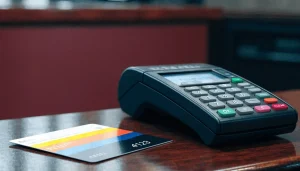
Debit cards are the most familiar alternative. UK casinos commonly list Visa and Mastercard debit cards, but acceptance still depends on the specific cashier and card product. A card may be available for deposits without being offered for withdrawals; closed-loop rules and anti-money-laundering controls can direct a payout back to the original source or require another verified route. Credit-card payments for gambling are not an alternative at UK-licensed casinos.
E-wallets create a separate payment account between the bank and casino. PayPal is widely recognised for payment convenience, but a specialist review notes that its use can be excluded from some bonus eligibility. That is a condition to check in the promotion terms, not a reason to assume that every casino applies the same rule. Skrill and Neteller appear at some sites; a specialist review also reports that these wallets are often excluded from promotions. Their presence in a cashier does not establish availability for withdrawals, so both directions need confirmation.

Open banking connects a casino payment to a bank account through an authorised service. A specialist review describes open banking as capable of supporting instant deposits and fast withdrawals at many sites. Those capabilities are not a timetable for every transaction: the specific casino, payment provider and account setup determine what is offered. Bank transfers are another direct route. A specialist review likewise reports that they can support instant deposits and fast withdrawals at many sites, but the available transfer option and its payout function should be checked on the individual account.
A prepaid voucher has a narrower role. Paysafecard is deposit-only, so it can fund play but cannot serve as the route for a casino withdrawal. Any balance or winnings therefore need a separate, casino-approved payout method. This is a practical distinction, not a minor cashier detail: a route that accepts funds in only one direction does not provide a complete payment path.
Debit cards
The most familiar alternative, where acceptance depends on the specific cashier and card product.
E-wallets
Accounts like PayPal, Skrill, or Neteller, which may be excluded from some bonus eligibility.
Open banking
Connects a casino payment to a bank account via an authorised service for instant deposits and fast withdrawals.
Prepaid vouchers
Options like Paysafecard, which are deposit-only and cannot be used for withdrawals.
The useful comparison is therefore functional rather than based on brand familiarity. A debit card may provide a direct bank-linked route; an e-wallet uses a separate wallet account; open banking and bank transfers connect payments to a bank; and a prepaid voucher funds deposits without handling payouts. Each option can have different availability for the same casino, and a method shown for deposits should not be treated as confirmed for withdrawals.
Before selecting an alternative, the account currency and the displayed transaction route matter as much as the payment label. A GBP account can avoid an unnecessary conversion step, while a mismatch between the casino account and the payment account may introduce friction. Payment providers may also request their own checks, and casinos can require KYC before processing a withdrawal. The operationally simplest route is generally one in which the casino account and payment method belong to the same customer; ownership mismatches add avoidable questions.
A sensible comparison begins with the cashier’s deposit list, then checks the withdrawal page and the casino’s payment terms. The terms should clarify whether withdrawals return to the original source, whether a different method is required, and what verification applies. For Paysafecard, the deposit-only status makes a separate payout route essential. For an e-wallet or bank-linked method, the cashier must explicitly show withdrawal support rather than merely display the brand.

No single alternative is interchangeable with Revolut in every respect. Cards, wallets and bank-linked services can handle deposits and withdrawals under different conditions; vouchers cover deposits only. The right comparison is the full route from funding to payout, not the speed or convenience claimed for one step in isolation.
Card Acceptance Does Not Guarantee a Deposit Route
A casino listing Visa or Mastercard does not, by itself, confirm that a particular Revolut-linked debit card will fund a deposit. The listing identifies a card network, not necessarily every issuer, card product or payment route available to customers in the UK. A specialist review may record those network names, but current UK availability and eligibility for the specific card still need to be checked in the casino’s cashier.
The distinction matters because “card accepted” can describe a broad payment category. The deposit decision is narrower: it concerns the card presented, the route selected in the cashier and the casino’s current settings. A Revolut card bearing a familiar network logo should therefore not be treated as confirmed simply because that logo appears on a payment page.
Do
- Check that the cashier offers a card option.
- Ensure the selected route is intended for a debit card.
- Match the card's network with the one named in the cashier.
Don't
- Assume a general card listing covers every specific route.
- Rely on a logo on a public page as proof of acceptance.
- Treat a network name as a guarantee for every card product.
At the point of deposit, check that the cashier offers a card option and that the selected route is intended for a debit card. Then compare the displayed network with the logo on the Revolut card. If the cashier provides separate card choices or instructions, follow the option that matches the card rather than assuming that a general card listing covers every route.
The outcome to look for is confirmation that the deposit has been accepted, not merely that the casino’s payment page names the card network. A payment method can be listed while the particular card product is ineligible or the route is unavailable for that account. If the cashier does not make the distinction clear, the listing alone leaves the question unresolved; confirmation from the operator is more useful than inference from a logo.
A practical check can be kept specific:
- Confirm that the cashier currently offers card deposits for the account.
- Match the card’s network to the network named in the cashier.
- Check whether the displayed option refers to debit-card deposits, rather than relying on a general statement that cards are accepted.
- Treat any successful confirmation as applying to that transaction route, not as proof that every casino or every card product will work.
This is a compatibility check, not a promise of acceptance. A card that appears eligible may still fail at the deposit stage, while a network listed on an operator’s information page may not establish that the corresponding Revolut-linked product is supported. Where the cashier rejects the card or gives no clear route, repeating the same assumption does not improve the evidence.
Search terms such as “casinos accepting Revolut debit cards” can make acceptance sound like a fixed property of a casino. In practice, the relevant question is more precise: does this casino currently offer a deposit route for this particular Revolut-linked debit card? The answer depends on the cashier’s available options and the card’s eligibility there. A network logo is a clue to check, not a settlement of the question.
Using Revolut-Linked Payments on Mobile Slots
“Revolut slots” are not a separate category of game. Revolut is a payment account or card route; the slot game is supplied by the casino. For real-money play on a phone, the practical question is whether the casino’s mobile cashier presents a deposit option that can be funded through the specific Revolut-linked payment route. A site that works on mobile does not thereby confirm that route.

The mobile check should be made inside the casino account, not inferred from a desktop payment page, an old review or a Revolut logo elsewhere on the site. Open the deposit flow on the device used for play and inspect the method shown, the currency displayed and any confirmation before authorising a transaction. If the method is absent or the payment is declined, the game’s availability does not change that result. Payment acceptance is a cashier setting, not a property of the slot itself.
Some UK Gambling Commission-licensed casinos accept Apple Pay for deposits. That is a separate option, not proof that a Revolut card will work through Apple Pay or that either method is enabled for every customer. The route shown at checkout is the relevant one. Using account details and a payment route belonging to the same customer also reduces avoidable ownership checks; a mobile screen does not remove those checks.
The remaining mobile considerations concern the casino account and the game interface. Remote gambling operators must verify a customer’s age before allowing a deposit, and new customers must be prompted to set a financial limit before their first deposit. Account-level limit controls must remain accessible. These requirements apply whether the deposit is made from a phone or a computer.
Online slots in Britain also have game-play restrictions that remain relevant on mobile: autoplay is banned, and each spin must last at least 2.5 seconds. A touch interface does not create an exemption. A casino’s mobile layout may make it easier to reach payment and account controls, but it does not alter the applicable rules or guarantee that every slot or payment route will appear on every device.
For real-money play, the operator must hold a current UK Gambling Commission operating licence. The regulator’s public register is the reference for checking that status; a Revolut logo or a successful card transaction is not evidence of a casino licence. The useful distinction is simple: mobile compatibility describes access to the site, while the cashier determines whether the selected payment route is available. Neither establishes that a particular game is “free” or funded through Revolut.
Real-Money Slot Deposits and Withdrawals
A deposit that appears in a real-money slots balance does not set the timetable for a withdrawal. The casino must process a payout separately, and its own approval stage can add time before funds are sent. A specialist casino review notes that a card deposit may be instant while a withdrawal can take several business days; this is an illustration of how the two stages can differ, not a timetable that applies to every casino or Revolut-linked card.
For slot play, the practical distinction is between crediting funds to the gambling account and releasing an approved balance. A successful deposit confirms only that the incoming transaction was accepted. It does not mean that a later withdrawal has been approved, that verification is complete or that the receiving payment route will handle both transactions on the same schedule.
The casino’s internal checks are part of the withdrawal process. Before releasing funds, a remote gambling licensee may need to complete KYC and confirm that account and payment details belong to the same customer. A specialist casino review reports that the first withdrawal can take longer when verification is still outstanding. That delay arises at the approval stage; it is separate from the time taken by the payment provider to deliver funds after release.

Closed-loop rules also affect the route. UK anti-money-laundering controls generally require winnings to be returned to the original payment source. Where the deposit and withdrawal details do not align, or the casino cannot confirm ownership, additional checks may be needed before processing continues. Keeping the casino account and payment details consistent reduces avoidable questions, but does not remove the casino’s verification obligations.
A useful status check distinguishes three events: the withdrawal request being submitted, the casino approving it, and the payment reaching the account. A request shown as pending has not necessarily left the casino. Once approved, the receiving route still has its own handling time. Any estimate should therefore be read alongside the casino’s stated processing policy and the account’s verification status, rather than inferred from the speed of the original deposit.
A Revolut-linked payment can be used to fund real-money slot play only where the casino accepts that route, but the brand of the payment account does not determine when winnings are released. Nor does a slot balance labelled as real money establish that a withdrawal is ready to process. The relevant conditions are the casino’s approval, completed KYC and the permitted return route.
Free-play access and real-money withdrawal rights are separate matters. A slot session funded with real money can produce a withdrawable balance only subject to the casino’s applicable terms and completed checks. A deposit route is not itself evidence of a withdrawal promise or a fixed payout time. For a realistic estimate, the casino’s withdrawal policy and the status of the individual request matter more than the speed at which the balance first appeared.
Debit Cards, Credit Cards and Casino Payments
For UK gambling, the key distinction is the source of the funds, not simply the card brand or the name on the payment screen. A debit card draws on money held in an account; a credit card provides borrowed funds. A Revolut-linked card should therefore be assessed by its actual card type and funding route, rather than treated as eligible merely because it carries the Revolut name.
Credit-card payments for gambling have been prohibited in the UK since 14 April 2020. The restriction remains in force. It also covers credit-card funds routed through a money service business, so moving the payment through an intermediary does not make credit funding acceptable. Remote gambling licensees must not accept credit-card payments for gambling.
The same principle applies when a digital wallet is involved: a wallet payment cannot be used where the wallet allows credit-card funds to be used for gambling. Changing the visible payment layer does not change the underlying source of the money. This is why a card-to-wallet transfer should not be assumed to avoid the restriction.
Debit-card funding is a different category. UK casinos commonly accept debit cards, including Visa and Mastercard, but that does not establish that every card product or route will work. A Revolut debit card is not the same as a Revolut credit card, and the distinction matters before any deposit is attempted. The casino’s payment terms and the card’s funding source must both align with the permitted debit-card route.

The same funding distinction remains relevant to slot deposits. A payment being labelled as a card transaction does not, by itself, show whether the funds came from a debit balance or credit. Nor does the fact that a card is linked to a fintech account change the UK restriction on credit-card gambling. Where the source is unclear, the transaction should not be treated as a valid debit-card payment on the strength of its branding alone.
This is a funding rule, not a promise that a particular Revolut product will be accepted or that a deposit will be available for withdrawal by the same route. Those are separate transaction conditions. For card use, the decisive question is whether the payment is genuinely debit-funded; credit-card gambling remains prohibited, including when credit is channelled through an intermediary.
Bonus Eligibility Depends on the Payment Method
A Revolut deposit and a welcome offer are separate decisions. A casino may accept a Revolut-linked payment while excluding that transaction from a promotion. The cashier confirms whether a deposit route is available; the promotion’s terms determine whether using it qualifies for a bonus. Neither should be treated as evidence of the other.
Before activating an offer, check its payment-method conditions alongside its eligibility rules. The wording should make clear whether deposits made by card or through a particular e-wallet count. If the terms exclude the chosen route, the deposit may be accepted without the bonus being credited. That is a less useful outcome than discovering the restriction before the transaction.
Bonus Eligibility
Before activating an offer, verify the payment-method conditions. Some deposits might be accepted by the cashier but excluded from the promotion terms.
A specialist review has reported that PayPal can be excluded from bonus eligibility, despite its appeal for speed and convenience. That is an observation about an offer, not a rule for every casino or promotion. The operator’s current terms are the relevant test. The same review-type reporting has noted that Skrill and Neteller may be unavailable for promotions at some sites. Their presence as payment options therefore does not establish that a deposit made through either wallet qualifies.
The practical check is specific to the offer being considered: read the payment exclusions, confirm whether the selected method is covered, and check any activation or code requirements stated in the terms. A bonus code, where required, cannot override an exclusion tied to the payment method. If the wording is unclear, written confirmation from the operator is more reliable than assuming that a successful deposit will trigger the offer.
This distinction matters for Revolut slots bonuses as well as general casino promotions. The label “welcome bonus” does not establish that every deposit route qualifies, and a no-deposit offer is not proof that a Revolut payment is involved at all. Eligibility depends on the offer’s stated conditions, not on the casino’s ability to process a payment.
The relevant comparison is therefore the value of the promotion after checking its restrictions, not the headline amount alone. If a chosen payment method is excluded, the offer has no value for that transaction. A casino’s promotional page and its terms should agree; where they do not, the terms and the operator’s clarification are the basis for deciding whether to proceed.
Minimum Deposits and Payment Limits
A low minimum deposit and a high maximum are separate terms. A specialist casino review reports that the minimum deposit commonly falls between £10 and £20, with the exact starting amount depending on the payment method. That range is a guide to what some reviewed sites state, not a fixed UK-wide rule. The cashier’s displayed minimum is the amount that applies to the selected route and account.

A £5 deposit should not be assumed to work simply because a Revolut-linked card is being used. Where the stated minimum is above £5, the transaction may not meet the casino’s threshold. The amount entered, the payment method selected and the minimum shown in the cashier need to match before a deposit is submitted. A different minimum for another route does not change the threshold attached to the chosen one.
Maximum deposits are a separate calculation. A specialist casino review notes that caps can differ by payment method and account status, and may apply per transaction, per day or per month. The relevant limit may therefore be lower than the amount a casino advertises generally. An account’s status can also affect the available ceiling, so a figure shown for one customer or payment route cannot safely be carried over to another.
For a Revolut deposit, the practical check is the amount permitted for the specific transaction in the casino cashier. The minimum determines whether the deposit can be submitted; the maximum determines how much can be placed through that route within the applicable period. Neither figure establishes that another payment method has the same range.
These thresholds are not a measure of how quickly a deposit is processed or how much it costs. They answer only whether the intended amount sits within the cashier’s permitted range. A transaction below the displayed minimum or above the applicable maximum will not become eligible because the account is otherwise ready to pay. The usable amount is the one that falls between the route-specific floor and the limits shown for that account.
- Confirm the cashier currently offers card deposits for your account.
- Match the card's network to the network named in the cashier.
- Verify the option refers to debit-card deposits specifically.
- Ensure the deposit amount meets the minimum threshold shown.
Comparing the Cost of Revolut Alternatives
The lowest-cost Revolut alternative cannot be identified by looking at a single fee. A specialist payment review notes that the total may include a casino charge, a provider fee, an issuer or bank charge, currency conversion and, for some routes, a network fee. The relevant comparison is the amount that reaches the casino, or returns to the account, after those costs are applied.
A visible flat charge is only part of the calculation. A specialist review also notes that an exchange-rate spread can cost more than a stated fee. A transaction may carry no separate payment charge and still lose value if the casino account and payment route use different currencies. Confirming that the casino account is set to GBP before making a transaction can help avoid an unnecessary conversion step; the rate and any conversion charge still need to be checked with the relevant provider.
The same method should be assessed across the full transaction, rather than by its deposit price alone. A route with no casino deposit fee may have a provider or bank charge elsewhere. A withdrawal may also have separate terms from a deposit, so the cost comparison needs to cover both directions where both are supported. Closed-loop rules can affect which source receives a payout, making a low-cost deposit route less useful if the return route carries different charges.
There is no payment method that is automatically the cheapest for every amount. A specialist review recommends comparing casino charges, provider fees, currency spread and network costs against the actual transaction value. The result can change with the amount, the currencies involved and the provider’s current terms. That makes a general claim about the best Revolut alternative in the UK unreliable: the final cost is specific to the route and transaction.

A practical comparison therefore records each possible charge separately: what the casino deducts, what the payment provider applies, whether the bank or card issuer adds a fee, and whether conversion or network costs arise. The figure that matters is the net amount after all applicable charges, not the method’s label or its advertised fee.
GamStop Status and Payment Checks Are Separate
A Revolut payment option does not show whether a casino is connected to GamStop. The cashier answers a narrow operational question: whether that payment route is available for an account. It does not establish the operator’s licensing position, self-exclusion arrangements or eligibility to accept customers who have excluded themselves.
The reverse is also true. A casino’s GamStop status cannot be inferred from its acceptance of Revolut, Visa or another payment method. Searches for casinos outside GamStop that accept Revolut combine two separate checks; treating one as proof of the other can lead to a misleading result. Revolut is a payment route, not a status check and not a way to bypass self-exclusion.
For Great Britain, remote gambling licensees serving customers must hold the relevant UK Gambling Commission licence. Online gambling is legal only through licensed and regulated sites, and UKGC-licensed casinos must provide self-exclusion tools. The operator’s licence should be checked on the Commission’s public register before any deposit. A payment logo or successful transaction does not replace that check.
Account controls are a separate licensing requirement. Before a new customer’s first deposit, the operator must prompt them to set a financial limit and make account-level limit controls accessible. Those controls govern the account’s financial settings; they do not establish GamStop status or confirm that a payment method is accepted.
Where self-exclusion is in place, seeking a payment route at a site believed to be outside the scheme should not be treated as a workaround. The relevant checks are independent: licensing and self-exclusion status on one side, payment availability on the other. No single Revolut deposit result can answer both.
What is the fastest withdrawal method for UK casinos?
PayPal, open banking and debit cards linked to fast payout systems are generally among the quickest options. The casino’s approval process and whether your account is fully verified also affect the time.
Why can a fast payout casino still delay my withdrawal?
A casino must approve the withdrawal, and first payouts can take longer while verification is completed. An unverified account or a mismatch between account and payment details can add friction.
Is Skrill available?
Yes, Skrill is available at some UK-friendly casino sites and remains a common deposit option. It may be excluded from promotions.
Which method has the lowest fees?
There is no universally cheapest method: compare casino and provider charges, any bank or issuer fees, currency conversion spread and network costs for your transaction.