
Check the payment route before relying on acceptance
 Available in GB
Card listings do not confirm Diners Club eligibility, which can depend on the casino, account and transaction.

Diners Club Acceptance: What the Available Evidence Can Confirm
A reliable claim that a UK online casino accepts Diners Club needs to identify the card product and show that it is currently available for the relevant account and transaction. A general reference to card payments does not meet that test. Nor does a page describing a casino as accepting cards establish that Diners Club is included.
A specialist review of casino payment options lists Visa and Mastercard, but that information does not confirm Diners Club acceptance. It also cannot settle whether either named card is available to every UK customer: current availability and card-product eligibility need to be checked in the casino’s cashier. The distinction is material. A payment brand may appear in a general description while a particular product is unavailable for a specific account or transaction.
On that basis, the claim that a named UK casino accepts Diners Club cannot be treated as established here. That is narrower than saying no casino accepts it. Acceptance can vary by operator and can change; without current, operator-specific confirmation, neither a positive list nor a definite market-wide rejection is supportable. Naming sites as Diners Club casinos would turn an unverified possibility into a recommendation.
The same standard applies to descriptions such as “best” or “all”. A ranking requires confirmed acceptance at each listed casino and a basis for comparing them. A complete list requires evidence that the relevant sites have been checked, not simply that some payment methods appear on their pages. Without those foundations, a list may look decisive while telling little about whether a Diners Club transaction would actually be available.
Searches for Diners Club casinos on Android do not change the payment question. A site being accessible on a mobile device is not evidence that a particular card product is accepted. Likewise, a reference to slots says nothing about the funding method available for a casino account. The payment claim needs its own support; the game catalogue and the device used to reach it cannot supply that proof.

Payout wording also needs careful interpretation. A statement that a casino accepts a card for deposits would not, by itself, establish that withdrawals can be sent to that same card. “Pays out to Diners Club” is a separate claim from “accepts Diners Club”, and each would require confirmation on its own terms. Combining them into one description risks presenting two unverified functions as though they were one.
The name Diners Club alone cannot resolve whether a card is eligible. It does not identify the specific card product, confirm that a casino supports it, or show that the option is enabled for a particular UK account. This is why a broad statement about “card deposits” should not be read as confirmation for every card carrying a familiar payment brand.
A Bitcoin reference does not close that gap either. It describes a different payment route and cannot establish that Diners Club is accepted alongside it. The same applies to broad claims about casinos supporting multiple payment types: a list of methods is useful only to the extent that each method is accurately identified and currently available for the stated purpose.

For a claim to be meaningful, its wording should match its evidence. “Cards accepted” is a general category. “Diners Club accepted for deposits” is a product-specific statement. “Diners Club available for both deposits and withdrawals” makes an additional claim about payouts. These descriptions are not interchangeable, and the stronger wording carries a higher evidential burden.
The usable conclusion is therefore limited: Diners Club acceptance at UK online casinos is not confirmed by the card information described above. That conclusion does not establish that acceptance is impossible, and it does not identify any operator as accepting or rejecting the card. It prevents a reader from mistaking a generic card reference, a mobile-access claim, or a casino-games description for proof of Diners Club availability.
Deposits and Withdrawals When Diners Club Is Not Confirmed
A payment method appearing in a casino cashier is evidence of a possible deposit route, not proof that the same route can return a withdrawal. That distinction matters when Diners Club acceptance has not been established: an alternative should be assessed as a complete payment path, from funding the account to receiving eligible funds, rather than as a logo or deposit button alone.
Do
- Check the casino's current cashier for specific card availability
- Read the payment terms alongside the cashier information
- Verify if the method supports both deposits and withdrawals
Don't
- Assume a general card reference means Diners Club is accepted
- Treat a deposit method as a confirmed withdrawal route
- Rely on mobile accessibility as proof of payment acceptance
UK casinos commonly accept debit cards, including Visa and Mastercard. These may be practical alternatives where the cashier lists them, but availability still needs to be checked for the specific account and transaction. A card option can be shown for deposits without confirming that withdrawals are paid back to that card. The casino’s payment terms and cashier should be read together, with separate attention to the deposit and withdrawal sections.
Open banking and bank transfers are also described as routes that can support deposits and withdrawals at many sites. A specialist review reports that these methods can provide instant deposits and fast withdrawals, but that account of performance should not be treated as a promise for every casino or transaction. Availability and processing depend on the route offered by the particular operator. A bank transfer listed as a deposit option does not, by itself, establish that it is available for payout.
The practical comparison is therefore not simply “Which method can accept money?” It is “Which method is accepted for the deposit, and what route does the casino use to return funds?” Those are separate terms. Before funding an account, the payment information should identify the methods supported for withdrawals, any conditions attached to them, and whether the selected route must be used first.

Why the return route can differ
UK anti-money laundering rules generally require a payout to be returned to the original payment source. Returning funds to that source is also a common anti-fraud control. In practice, this can limit the alternatives available when a withdrawal is requested: a casino may need to send funds back through the original route, or ask for additional checks before using another one.
This makes the original deposit method a material choice, not a detail to resolve later. If a transaction begins through a card, bank transfer or another route, the casino may apply closed-loop rules when processing a withdrawal. Where an alternative payout route is considered, extra verification may be required. The exact arrangement is set out in the casino’s terms and payment information; it should not be inferred from the list of deposit logos.
Using account information and a payment route belonging to the same customer can reduce avoidable friction over basic ownership details. A mismatch between the named account holder and the payment source may prompt questions or additional checks. That does not determine whether a method is supported, but it is a reason to treat ownership requirements as part of payment compatibility.
How to compare alternatives
A sound comparison records each route against the same points:
- Is it available for deposits in the cashier?
- Is it also listed for withdrawals?
- Does the casino require the original source to be used for returns?
- Can an alternative route trigger additional verification?
- Do the payment terms specify any restrictions that change the route after a deposit?
A method that passes only the first check is a deposit option, not a confirmed deposit-and-withdrawal solution. If the cashier lists Visa or Mastercard, that confirms neither the withdrawal route nor the eligibility of every card product. If it lists bank transfer or an open banking service, that likewise does not establish that the same facility handles both directions for every customer.
For anyone comparing alternatives to Diners Club, the most useful evidence is the current cashier and the operator’s written payment terms for the account in question. A general statement that a method is supported cannot settle whether it is available for a specific transaction or whether it can receive a payout. Where those details do not align, clarification from the operator is preferable to assuming that a deposit method doubles as a withdrawal method.
The calculation is straightforward: a route is suitable only if its deposit availability, return conditions and ownership requirements fit together. A fast or familiar deposit option may still leave the withdrawal path subject to the original-source rule. Checking both sides before making the first transaction reduces the chance of choosing a method that funds the account but does not match the intended route for receiving money back.
Slots, Casino Choice and the Limits of a Diners Club Search
A casino’s game catalogue and its cashier are separate parts of the service. A slot being available at a site does not establish that Diners Club can fund play there. The same applies to a site described as new or to an app offering casino games: those labels say nothing about whether a particular payment route is accepted.
That distinction matters when comparing casinos by card brand. A list of slots cannot identify which payment methods the operator supports, and a payment logo cannot confirm that every game in the catalogue is available through a particular route. Diners Club acceptance needs to be checked as a payment term, not inferred from the presence of slots, the casino’s name or a general description of its cashier.
The same standard applies to claims about a “best” Diners Club casino or slot site. A meaningful comparison would need confirmed acceptance of the card, alongside the terms that affect use of the service. A game title or an appealing catalogue does not supply that information. Nor does a casino being newly launched establish that it accepts Diners Club.

Skrill and Neteller are listed by some casino sites as payment options, but they are not substitutes for evidence about Diners Club. A specialist casino review describes Skrill as one of the more common deposit methods at UK-facing sites in 2026; that is a statement about Skrill, not about card acceptance at any particular casino. The two methods must not be treated as interchangeable simply because each can appear in a cashier.
Promotion terms create a separate distinction. A specialist review notes that Skrill and Neteller may be excluded from some promotions. Their presence as deposit options therefore does not establish eligibility for an offer, and neither their availability nor a promotion involving them proves that Diners Club is accepted. Payment access and promotion eligibility are separate conditions.
For a comparison based on slots, the relevant information is the game catalogue. For a comparison based on deposits, the relevant information is the cashier’s current method list and its terms. Combining those into one assumption produces a weak result: the site may offer the desired games while the named card is not supported, or a payment method may appear without applying to a particular promotion.
A useful assessment keeps each claim tied to its own evidence. Game availability answers which titles can be played at a casino. Payment terms answer which deposit methods the cashier accepts. Promotion rules answer whether a payment route qualifies for an offer. None of those answers can stand in for the others.
This also limits what can be inferred from searches for Diners Club slots, slot machines or casino apps. Those phrases describe a combination of games and a payment brand, but they do not establish that the games are funded by that card. The practical comparison is between the casino’s listed games and its stated payment conditions, checked as separate parts of the service.
Withdrawal Timing and the Original Payment Source
A deposit being accepted does not establish how quickly a withdrawal will arrive. The two transactions can follow different steps: a card deposit may be instant, while a payout takes several business days. A specialist casino review describes that contrast, but it is not a timetable for every casino or payment route. The withdrawal terms and cashier information for the specific account determine what applies.
The time shown for a withdrawal can include more than the transfer from the casino to a bank or payment provider. The casino first has to process and approve the request. A specialist review notes that this internal stage can extend the total processing time, particularly for a first withdrawal while verification is being completed. A displayed payment-provider estimate therefore cannot, by itself, account for the full wait.

KYC is relevant to that first payout. If the account is not fully verified, the casino may need to complete checks before approving the withdrawal. A specialist review identifies both account verification and the casino’s approval process as factors in withdrawal speed. Those are separate stages from the final delivery of funds, so a quick deposit does not establish that either stage has been completed in advance.
Payment routing is another constraint. UK anti-money laundering rules generally require a casino payout to return to the original payment source. This closed-loop approach is an anti-fraud control, not a promise that every method used for a deposit can receive a withdrawal. A payment route may be deposit-only, or the return may need to follow the casino’s specified process. Where an alternative source is proposed, additional verification may be required.
That distinction matters when assessing claims about Diners Club casino withdrawals. A reference to a card or payment method in deposit information does not establish that it is available for payouts, and a short deposit time says nothing about the withdrawal route. Diners Club should not be treated as a confirmed payout option unless the casino’s current cashier and payment terms expressly show it for withdrawals, as well as setting out any conditions attached to that route.
For a low-deposit account, the practical calculation is still based on the complete transaction path, not just the initial payment. The deposit method, the casino’s approval process, verification status and the permitted return source all affect what happens after a withdrawal request. A claimed instant withdrawal is not the same as instant receipt: approval and checks remain part of the process. Without a stated, applicable timeline for each stage, “fast payout” is a label rather than a reliable arrival estimate.
The cleanest route is often one named account used consistently for deposits and withdrawals. Matching the account details and payment ownership reduces the chance that basic identity differences create avoidable friction, but it does not bypass KYC or guarantee a particular processing time. If the original method cannot receive the payout, the casino’s terms should explain the alternative route and any extra checks before a deposit is made.
So, withdrawal time is not determined by the speed of the deposit alone. The relevant terms are the casino’s approval procedure, the account’s verification status, the destination allowed under closed-loop rules and the time the receiving provider takes to deliver funds. Those conditions—not the Diners Club name, a bonus label or an instant-deposit claim—determine whether a particular withdrawal route is available and how long it may take.
Can a Diners Club Card Be Used for Casino Deposits?
A Diners Club logo does not, by itself, establish that a card can fund a casino account. Two separate checks are involved: whether the card product is eligible under UK gambling rules, and whether the casino’s cashier accepts that product for deposits. A familiar payment brand is not a substitute for either check.
The regulatory position is clear for credit cards. The UK regulator prohibited credit-card payments for gambling on 14 April 2020, and the restriction has not been relaxed. Remote gambling licensees cannot accept credit-card payments for gambling, including when credit-card funds are routed through a money service business. A wallet route does not make such a payment acceptable where the wallet permits credit-card funds to be used for gambling.

That makes the underlying card classification decisive. The Diners Club name alone does not show whether a particular card draws on credit or qualifies as another type of payment card. The issuer’s terms and the product details need to establish that point; the casino’s payment screen then needs to show whether the product is supported. If the card is a credit card, it cannot be used for a gambling deposit at a UK-licensed casino. If its funding type is different, that still does not guarantee acceptance.
A specialist review lists Visa and Mastercard among payment methods, but those brand names do not confirm current UK availability or eligibility for every card product. The cashier is the relevant place to check the options presented for the account. Even a listed card brand cannot establish that a Diners Club product will pass the casino’s checks.
The practical distinction is between a payment brand and a usable deposit route. A cashier may display card payments without accepting every product issued under every brand. It may also distinguish between deposit methods, while the card issuer applies its own transaction rules. Those are separate points, not evidence that Diners Club is accepted.
For a deposit decision, the key conditions are therefore narrow: the card must not be a credit card used for gambling, and the casino must explicitly support the specific product in its cashier. If either condition is not met, the Diners Club name does not make the transaction eligible. A search for Diners Club casinos or slots cannot override that distinction, and no claim of acceptance follows merely from seeing Visa or Mastercard listed elsewhere.
- Confirm the card is not a credit card
- Check the casino cashier for specific Diners Club support
- Verify if the card is eligible for both deposits and withdrawals
- Review the operator's written payment terms
No-Deposit Offers and Payment Eligibility
A no-deposit promotion and a payment method answer different questions. The offer describes whether a qualifying account can receive a promotion without making a deposit; the cashier shows which payment routes are available for transactions. Neither establishes that Diners Club is accepted, and a bonus label is not evidence that a card can fund casino play.
The distinction matters for searches for Diners Club free spins or a no-deposit bonus. A site might advertise a promotion without requiring a deposit, yet impose separate eligibility conditions in its terms. Those conditions can determine who qualifies and whether an account remains eligible after a particular payment route is used. The only sound basis for assessing an offer is its own terms, not an assumption drawn from the promotion’s headline.
Payment-method exclusions are not unusual in the material described by specialist casino reviews. Those reviews report that PayPal can be excluded from bonus eligibility, despite its appeal as a payment option. They also report that Skrill and Neteller are offered at some sites but may be excluded from promotions. These are method-specific examples, not a universal rule for every casino or offer. They also say nothing about whether Diners Club is accepted.
A no-deposit offer should therefore be read for its actual eligibility wording: whether registration alone is sufficient, whether a payment method affects qualification, and what the promotion permits. “No deposit” does not mean “no conditions”. Nor does a “no wagering” label establish that winnings are immediately withdrawable; that depends on what the offer terms say about playthrough and withdrawal eligibility. If those terms are unclear, the advertised benefit cannot be reliably valued.
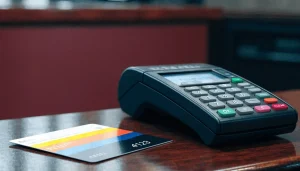
The same separation applies to slots promotions and bonus codes. A code may relate to an offer, but entering it does not prove that a Diners Club transaction will be accepted or that the promotion will apply to an account using that route. A casino’s promotion page, terms and cashier serve different purposes; treating one as confirmation of the others turns a marketing label into a payment claim.
For a real-money no-deposit offer, the practical calculation is not simply the stated bonus. Eligibility, any payment-method exclusion and the conditions attached to using or withdrawing promotional value determine what the offer is worth. Where Diners Club acceptance is not established, the promotion cannot fill that gap. It may still be possible to assess a separately stated offer, but its value should be kept separate from any claim about card acceptance.
Why Diners Club Acceptance and Casino Access Are Separate Questions
A Diners Club payment option, a slots catalogue and a casino’s availability in Britain are separate features. One does not establish the others. A site displaying slots is not thereby shown to accept Diners Club, and a payment method’s presence does not identify the site’s regulatory status or whether it can be accessed by someone using a particular exclusion scheme.
“Not on GamStop” describes a different issue from card acceptance. It is not a payment feature, and it does not itself show that a casino is authorised to serve customers in Britain. Remote gambling licensees selling into the British market must hold the relevant UK Gambling Commission licence. A site’s access status and its licence status therefore need to be assessed separately from the methods shown in a cashier.
Regulatory Context
Remote gambling licensees in the UK must hold a valid UK Gambling Commission licence. A site's access status and its licence status should be assessed separately from the payment methods shown in the cashier.
The word “closed” also needs a precise subject. A casino stopping service, a payment route disappearing from its cashier and a card brand no longer being accepted are different events. The phrase “Diners Club closed” cannot identify which one occurred, let alone supply a reason. A card-related change should not be treated as proof that a casino shut down, moved outside GamStop or changed its regulatory position.
There is one relevant UK rule, but it has a defined scope: the regulator prohibited credit-card payments for gambling on 14 April 2020, and the prohibition remains in force. That rule concerns the funding method. It does not, by itself, explain why a named casino closed or establish whether a site is included in GamStop. Using it as an explanation for a specific closure would confuse a general payment restriction with an operator’s individual circumstances.
A slots bonus is another separate condition. Its availability depends on the casino’s offer terms; it cannot be inferred from a Diners Club reference, a slots page or a claim that a site is outside GamStop. The commercial detail that matters is the actual operator, the applicable licence and the terms attached to the offer or payment route. Combining those labels into a single claim may sound decisive, but it does not make them evidence of the same thing.
Mobile Deposits and Fast Withdrawals: What the Terms Actually Say
A mobile-friendly cashier and a fast withdrawal are separate features. A payment option appearing on a phone screen does not establish that it supports Diners Club, nor that it can receive withdrawals. The relevant terms are the methods actually available in the cashier and the conditions attached to a payout.

A specialist review identifies PayPal, open banking services and debit cards connected to fast payout systems as methods that can be among the quicker withdrawal routes. That is a description of payment-method categories, not a timing promise for every casino or transaction. It also provides no basis for treating Diners Club as a fast-withdrawal option. The card name alone says nothing about whether a casino supports it or how quickly funds would be returned.
The same review notes that withdrawal speed depends on the casino’s internal approval and whether the account is fully verified. In practice, the payment provider is only one part of the process: a fast transfer route cannot remove a casino’s pending checks. An unverified account or an outstanding approval can therefore affect the time before a payout is sent, even where the selected method is described as fast.
Mobile use does not change those conditions. A payment page that works on a phone is not evidence that a particular card product is accepted, and a deposit option should not be read as a withdrawal option unless the terms confirm both. For Diners Club, neither mobile compatibility nor payout speed can be inferred from general claims about debit cards or other payment methods.
The useful comparison is consequently narrow: whether the cashier lists the method, whether the terms identify it for withdrawals, and what verification or approval steps apply before payment. Without those details, “fast” describes a category of payment route, not a reliable arrival time. That distinction matters more than the device used to open the cashier.
Does a fast deposit mean a fast withdrawal?
No, a fast deposit does not establish the speed of a withdrawal. Payouts are subject to internal casino approval, KYC verification, and processing times by the payment provider.
Can I use any card for casino deposits?
Not necessarily. You must ensure the card is not a credit card, as these are prohibited for gambling in the UK, and confirm that the specific casino cashier supports your particular card product.
No-Deposit Bonus Claims Need a Payment-Term Check
A no-deposit bonus and a Diners Club deposit option are separate claims. An offer that requires no initial payment does not demonstrate that the casino accepts Diners Club for later deposits. Nor does a payment symbol on a general page establish that the card product is available to UK customers in the cashier.
The phrase “highest no-deposit bonus” is not enough to compare offers. A headline value, where one is stated, has to be read alongside the offer’s eligibility conditions and the payment methods it permits. Without those terms, there is no reliable basis for ranking the offer by its practical value or connecting it to Diners Club.
PayPal illustrates why the two checks should remain separate. A specialist casino review reports that PayPal can be excluded from bonus eligibility, despite being presented as a payment option. That observation concerns one payment method and does not establish a general rule for every casino or promotion. It also says nothing about Diners Club acceptance.
The relevant details are therefore specific to the offer: whether the promotion is available to the account, which payment routes qualify, and whether a named method is accepted for deposits. Those details should be checked in the promotion terms and the casino cashier, rather than inferred from a bonus headline or a broad payment-method list.
A no-deposit claim may describe an offer with no qualifying deposit requirement; it cannot substitute for evidence about a card deposit. Conversely, a casino’s acceptance of a payment method would not by itself show that the method qualifies for a promotion. The two conditions need separate confirmation.
Where Diners Club is not explicitly listed as an eligible deposit method for the relevant UK account, a no-deposit offer provides no reason to treat acceptance as established. A large advertised bonus does not close that evidential gap; it only makes the offer headline larger.

Real-Money Slots and the Payment Route
A real-money slot requires a payment route the casino accepts; the game itself does not establish which card products can fund an account. UK casinos commonly accept debit cards, including Visa and Mastercard. That gives a documented baseline for card deposits, but it does not confirm that Diners Club is accepted or that every card bearing a familiar network logo will work.
The distinction matters because card type is not a minor cashier detail. The UK regulator banned credit-card payments for gambling on 14 April 2020, and the restriction remains in force. A credit card cannot be treated as an alternative route to real-money play at a UK-licensed casino. Nor does the Diners Club name alone show whether a particular card is a debit product or whether the casino supports it.
For a Diners Club card, the relevant question is therefore narrower than whether a casino offers slots: does the cashier identify that exact card product as an eligible payment method? General acceptance of debit cards, or of Visa and Mastercard, cannot answer that. A payment option displayed for one card type does not establish acceptance of another.
The practical order is to separate the product from the game. First, determine whether the card is a debit or credit product. Then check whether the casino’s current cashier accepts that specific product. Only where an eligible route is available can a deposit fund real-money play. This avoids treating a slot catalogue as evidence about its payment rails.
The available baseline supports debit-card use at UK casinos, including Visa and Mastercard, while credit-card gambling is prohibited. It does not support describing Diners Club as a confirmed way to fund real-money slots. A card’s brand, the casino’s game offering and the payment option actually presented are separate pieces of information; combining them without checking the product would turn an assumption into a payment claim.
Why can a fast payout casino still delay my withdrawal?
Because the casino must approve the withdrawal internally, and a first payout may take longer while verification is completed. Unverified accounts can also slow down processing.
Are fast casino withdrawals guaranteed?
No. The time depends on the casino’s approval process and whether your account is fully verified.
Which method has the lowest fees?
There is no universally cheapest method. Compare the casino’s charges, provider and bank fees, currency-conversion spread, and any network costs for your transaction.
Why must withdrawals return to the deposit method?
Returning funds to the original payment source is a common anti-fraud and anti-money-laundering control. Using another route may require extra verification.
What is the fastest withdrawal method for UK casinos?
PayPal, open banking services, and debit cards linked to fast payout systems are generally among the quickest options. The casino’s approval process and your verification status also affect the timing.
Do UK casino withdrawals require verification?
Verification may be needed, particularly for a first withdrawal, and an account that is not fully verified can take longer to process.